
Limb Salvage Surgery in Gurgaon
Limb-sparing cancer surgery in Gurgaon for selected bone and soft-tissue tumours. Dr. Pushpinder Gulia specialises in surgical oncology, with limb salvage surgery focused on effective tumour removal while preserving limb function whenever safely possible.
Book Free Screening
Connect with our specialists for personalised guidance
What is Limb Salvage Surgery?
Limb salvage surgery is a limb-sparing procedure used to remove a tumour or severely damaged tissue while preserving the arm or leg. In cancer treatment, the aim is to remove the tumour without amputation and to preserve as much movement, strength, and function of the limb as possible. It may involve:
- Removing the tumour and surrounding affected tissue
- Removing part of the affected bone
- Replacing damaged bone with a graft or implant
- Reconstructing a damaged joint
- Repairing blood vessels, nerves or soft tissue
- Preserving healthy muscles and tissues
Limb Salvage Procedure: Step by Step
Limb salvage combines removal of the diseased tissue with reconstruction of the affected area. The exact procedure depends on the condition, tumour location, and the amount of tissue to be removed. The process involves:
1. Evaluation and Planning
Before surgery, doctors may perform:
- MRI, CT scan, or X-rays
- Biopsy for suspected bone or soft-tissue cancer
- Blood tests
- Blood-flow tests when needed
- Assessment of nerve and muscle function
For some cancers, chemotherapy or radiation therapy may be given before surgery to reduce the tumour and make limb-sparing surgery possible.
2. Removing the Tumour or Damaged Tissue
The surgeon removes:
- The tumour or diseased tissue
- The affected section of bone, when necessary
- A margin of healthy tissue around a cancerous tumour
- As much healthy muscle, nerve and blood vessel tissue as possible
3. Reconstructing the Limb
After removal, the affected area may be rebuilt using:
- Bone grafts to replace missing bone
- Metal implants to restore bone stability
- Joint prostheses when a joint is removed
- Plates, screws or rods to stabilise the bone
- Soft-tissue or skin grafts to cover the surgical area
- Blood-vessel or nerve repair when required
4. Stabilising the Limb
- The reconstructed bone or joint is stabilised
- The surgical wound is closed
- Drains or specialised wound coverings may be used when needed
- Complex cases may require additional reconstructive procedures
5. Rehabilitation
After surgery, rehabilitation focuses on:
- Controlling pain and swelling
- Protecting the reconstructed area
- Gradually restoring movement
- Improving muscle strength
- Regaining balance and mobility
- Returning to daily activities
Are There Any Risks Associated?
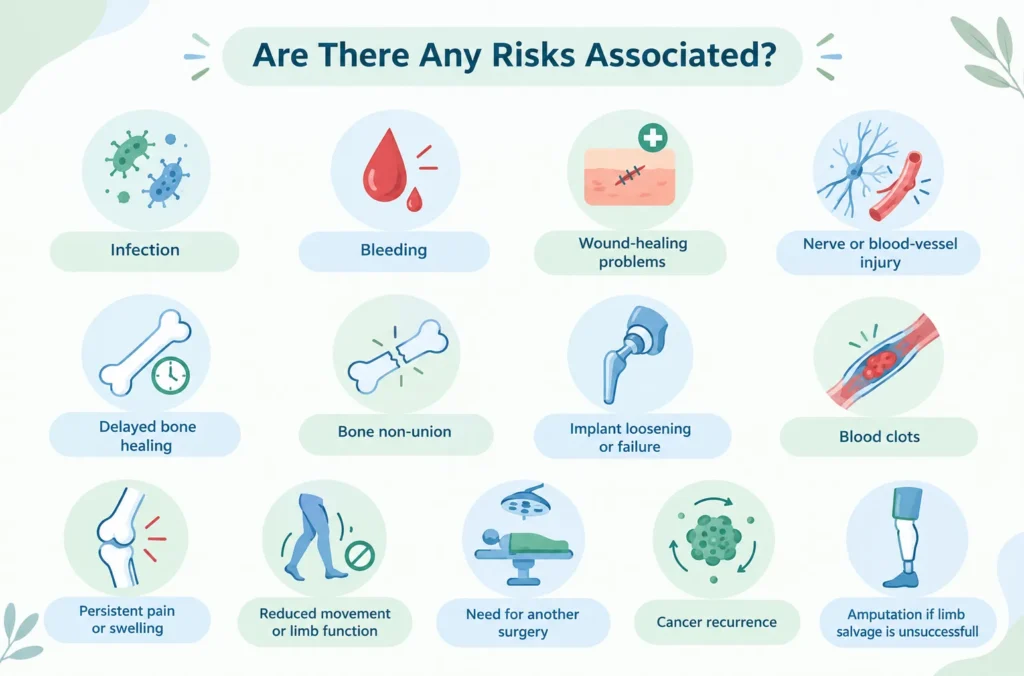
Limb salvage surgery is a complex procedure, so complications can occur during recovery. The risks depend on the type of surgery, the extent of tissue removal, and the reconstruction performed. Possible risks include:
- Infection
- Bleeding
- Wound-healing problems
- Nerve or blood-vessel injury
- Delayed bone healing
- Bone non-union
- Implant loosening or failure
- Blood clots
- Persistent pain or swelling
- Reduced movement or limb function
- Need for another surgery
- Cancer recurrence
- Amputation if limb salvage is unsuccessful
Recovery After Limb Salvage Surgery
Recovery after limb salvage surgery can take several months, depending on the extent of surgery and type of reconstruction. Physiotherapy and gradual return to movement are important for restoring strength and function. Recovery may include:
- Hospital stay: Monitoring, pain control and wound care after surgery
- Mobility support: Crutches, a walker or other aids may be needed
- Limited weight-bearing: Weight placed on the limb is increased gradually as healing allows
- Physiotherapy: Exercises to improve movement, strength and balance
- Wound care: Regular monitoring of the surgical site
- Follow-up appointments: Checks for healing, implant function and complications
- Cancer monitoring: Regular scans or examinations when surgery was performed for cancer
- Long-term rehabilitation: Some patients may need several months to regain optimal limb function
Conclusion
Limb salvage surgery can help preserve the affected limb while treating cancer, severe injury, or other conditions that threaten its function. The right approach depends on the individual diagnosis and overall health. For personalised evaluation and treatment planning, consult Dr. Pushpinder Gulia, a surgical oncologist in Gurgaon, to discuss whether limb salvage surgery may be suitable for you.
Frequently Asked Questions
Everything you need to know before your consultation
Are there any risks of limb salvage surgery in India? expand_more
Yes. Possible risks include infection, bleeding, delayed healing, nerve or blood vessel injury, implant problems, and reduced limb function.
What is the cost of limb salvage surgery in Gurgaon? expand_more
The cost of limb salvage surgery in Gurgaon varies depending on the type of surgery, reconstruction required, hospital stay, and overall treatment plan. A specialist can provide an estimate after evaluation.
Are there any complications of limb salvage surgery? expand_more
Complications may include infection, wound-healing problems, non-union, implant failure, persistent pain, or the need for additional surgery.
How is limb salvage surgery different from amputation? expand_more
Limb salvage aims to remove the disease or damaged tissue while preserving the limb. Amputation involves removing part or all of the affected limb when preservation is not possible or safe.
How do doctors decide if limb salvage surgery is suitable? expand_more
Doctors assess the extent of the disease or injury, blood supply, involvement of nerves and blood vessels, overall health, and expected limb function.
Can limb salvage surgery be performed for bone cancer? expand_more
Yes. Limb salvage surgery can be considered for certain bone cancers when the tumour can be removed while preserving limb function.
Is limb salvage surgery an option for advanced cancer? expand_more
It may be possible in selected cases, depending on the cancer’s location, spread, response to treatment, and whether the limb can be safely preserved.
How can I book an appointment with Dr. Pushpinder Gulia for limb salvage surgery in Gurgaon? expand_more
You can contact Dr. Pushpinder Gulia’s clinic to schedule a consultation and discuss your diagnosis, treatment options, and suitability for limb salvage surgery in Gurgaon.
 WhatsApp