
Robotic Cancer Surgery in Gurgaon
Advanced robotic surgery for selected cancers at CK Birla Hospital, Gurugram. Dr. Pushpinder Gulia specialises in surgical oncology, with robotic surgery among his focus areas for selected head, neck, thyroid and salivary gland tumours.

Book an Appointment
Our team will get back to you within a few hours
What Is Robotic Cancer Surgery?
Understanding how robotic-assisted surgery is used in cancer treatment
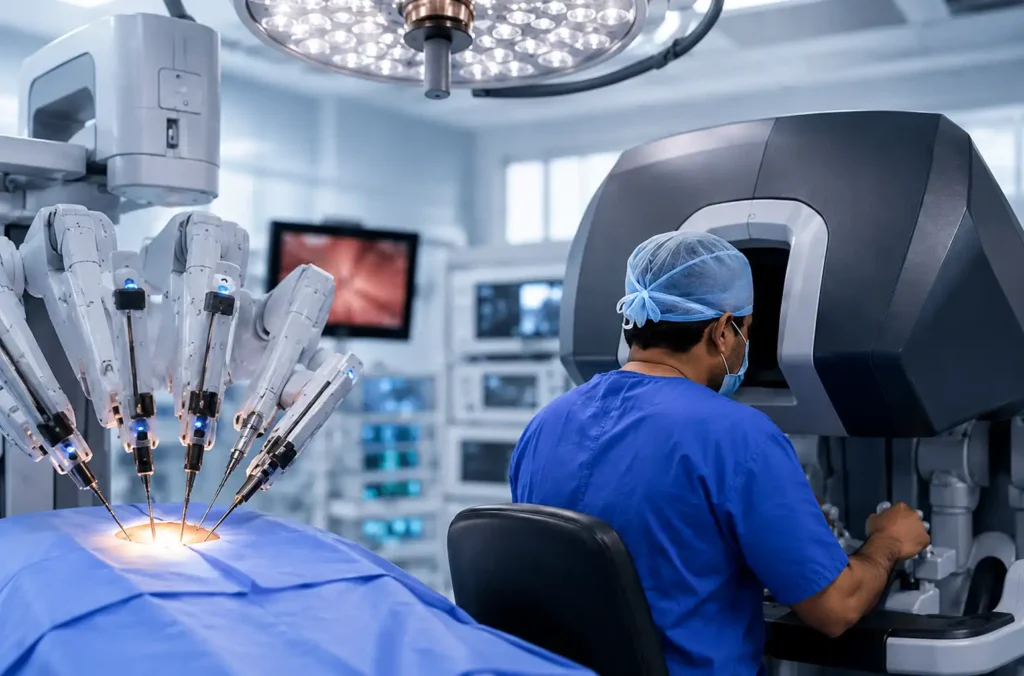
Robotic surgery for cancer is a form of minimally invasive surgery in which the surgeon controls specialised instruments through a robotic-assisted system.
The surgeon operates from a console while viewing the surgical field through a high-definition camera. The robotic instruments can provide flexible, controlled movements that may be useful when operating in confined or difficult-to-access anatomical areas.
The robot does not independently perform the operation. The surgeon remains in control of the procedure.
For cancer surgery, the technology supports the surgical process, but the primary objective remains appropriate tumour removal and cancer control while protecting important surrounding structures whenever clinically possible.
How Is Robotic Surgery for Cancer Performed?
A personalised surgical pathway based on your cancer type, tumour location, stage and overall health.
Cancer Evaluation
Your medical history, biopsy or pathology reports, imaging scans and cancer stage are reviewed to assess your diagnosis and treatment options.
Surgical Planning
Your surgical team determines whether robotic surgery is appropriate and discusses the most suitable approach for your cancer and individual needs.
Robotic-Assisted Surgery
After anaesthesia, small incisions are made for the camera and robotic instruments. The surgeon controls the robotic system throughout the procedure.
Follow-Up & Oncology Care
Follow-up visits help monitor recovery and review pathology results. Additional cancer treatment may be recommended when clinically required.
Recovery & Support
Follow-ups and expert monitoring support healing, outcomes, and long-term vision health.
Book a consultation to discuss your diagnosis and personalised surgical options.
Robotic Surgery for Head & Neck, Thyroid and Salivary Gland Tumours
A focus area of Dr. Pushpinder Gulia's surgical oncology practice
Robotic surgery can be particularly relevant in selected head and neck procedures where access to the tumour may be challenging and preservation of surrounding structures is important.
Dr. Pushpinder Gulia's CK Birla Hospital profile specifically lists head, neck, thyroid and salivary gland tumours, including robotic surgery, among his focus areas.
Depending on the diagnosis, robotic techniques may be considered for selected tumours of the:
- Head and neck
- Thyroid
- Salivary glands
- Throat and related anatomical regions
Whether robotic surgery is appropriate depends on the tumour's location, size, stage, relationship with surrounding structures and the surgical objective.
Robotic surgery is not suitable for every head and neck or thyroid cancer. The approach is selected after individual evaluation.
Benefits of Robotic Cancer Surgery
Robotic-assisted surgery can provide technical advantages for appropriately selected procedures.
Enhanced Visualisation
A high-definition, magnified 3D view can help the surgeon visualise the operating field in greater detail.
Greater Instrument Flexibility
Wristed robotic instruments enable controlled movements, which can be useful when operating in confined anatomical spaces.
Smaller Surgical Incisions
Selected procedures can be performed through small access incisions rather than the larger incision used in many open operations.
Potentially Less Blood Loss
Some minimally invasive procedures may result in less blood loss than comparable open procedures, although this depends on the type and complexity of surgery.
Potential Recovery Benefits
For selected operations, minimally invasive surgery may be associated with less postoperative discomfort and a shorter recovery compared with open surgery.
Who May Be a Candidate for Robotic Cancer Surgery?
Suitability depends on your cancer and overall health.
Cancer Type & Stage
The type and stage of cancer help determine whether robotic surgery may be suitable.
Tumour Location
Tumour size, location and nearby structures guide surgical planning.
Overall Health
Your health, previous treatments and medical conditions are considered.
Individual Assessment
Imaging, pathology and clinical findings help determine the right approach.
What to Expect During Recovery
Recovery varies with the procedure and your health.
Recovery after robotic cancer surgery depends on the type and extent of the procedure, your overall health and how your body responds after surgery. Your surgical team will guide you through each stage of recovery and follow-up.
Key Points
- Post-Surgery Monitoring: Your pain, wound healing and overall condition are monitored after the procedure.
- Gradual Return to Activity: Walking and daily activities are increased gradually as your recovery progresses.
- Pathology Review: The final pathology report helps determine the next steps in your cancer treatment, when required.
- Follow-Up Care: Regular appointments help assess recovery and plan ongoing cancer surveillance or treatment.
- Personalised Recovery Plan: Recovery timelines and instructions vary according to the surgery performed and individual patient needs.
Explore Your Surgical Options
Personalised care for every cancer journey.
Robotic cancer surgery in Gurgaon offers a minimally invasive approach for selected patients. The right surgical technique depends on your cancer type, stage, tumour location and overall health. A detailed consultation can help determine whether robotic-assisted surgery is appropriate for you.