
Gallbladder Cancer Treatment in Gurgaon
Explore personalised gallbladder cancer treatment in Gurgaon, including surgery and other treatment options based on the cancer stage, spread and overall health.

Book an Appointment
Our team will get back to you within a few hours
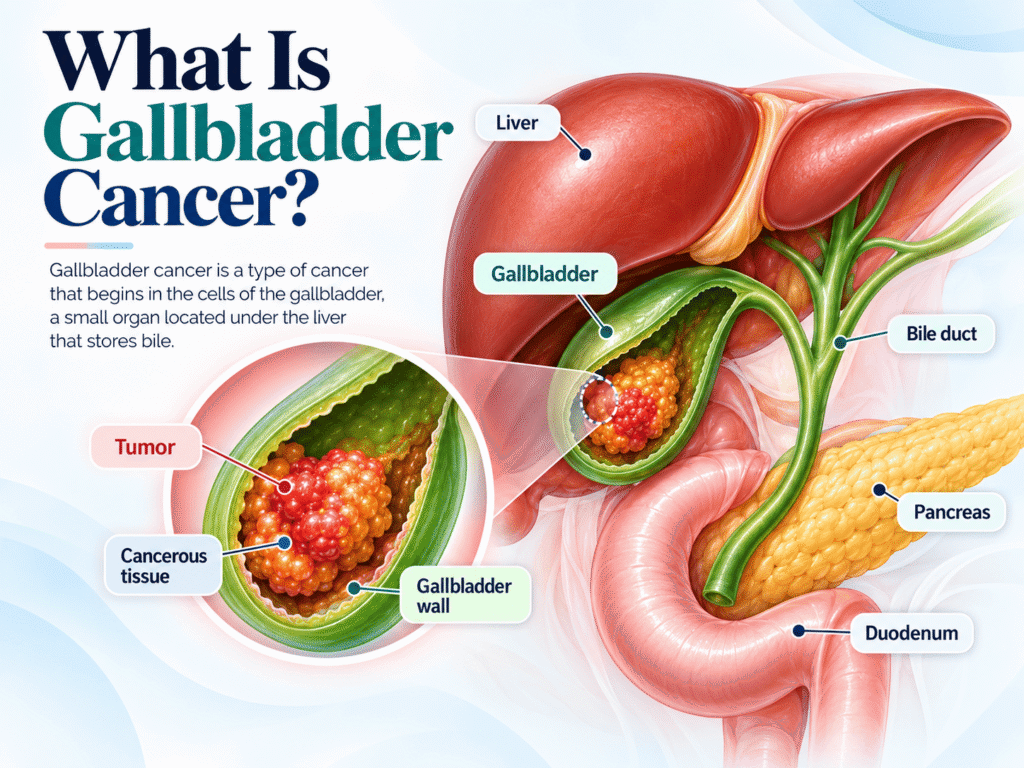
What is Gallbladder Cancer?
Understanding Gallbladder Cancer, Its Causes and Progression
Gallbladder cancer is a rare cancer that begins in the gallbladder, a small, pear-shaped organ beneath the liver. It stores bile, which helps the body digest fats.
Most gallbladder cancers begin in glandular cells lining the gallbladder and are called adenocarcinomas. As cancer grows, it can extend through the gallbladder wall and involve nearby tissues, lymph nodes, the liver or other organs.
Early diagnosis can be difficult because symptoms may be absent or resemble common gallbladder conditions. Some cancers are discovered unexpectedly after gallbladder removal for another condition.
The appropriate gallbladder cancer treatment in Gurgaon depends on the cancer stage, spread, pathology and whether complete surgical removal is possible.
Types of Gallbladder Cancer
Common and Rare Types of Gallbladder Cancer
Adenocarcinoma
Adenocarcinoma accounts for most gallbladder cancers. It develops from gland-forming cells in the inner lining of the gallbladder.
Papillary Adenocarcinoma
Papillary adenocarcinoma is a less common form in which cancer cells grow in finger-like projections. These cancers may behave differently from other gallbladder adenocarcinomas.
Squamous Cell Carcinoma
This is a rare cancer arising from squamous-type cells.
Adenosquamous Carcinoma
An uncommon tumour containing both glandular and squamous components.
Neuroendocrine Tumours
Neuroendocrine tumours are rare cancers that develop from specialised cells with hormone-related functions.
Other Rare Tumours
Very rare cancers, including certain sarcomas and lymphomas, can also affect the gallbladder.
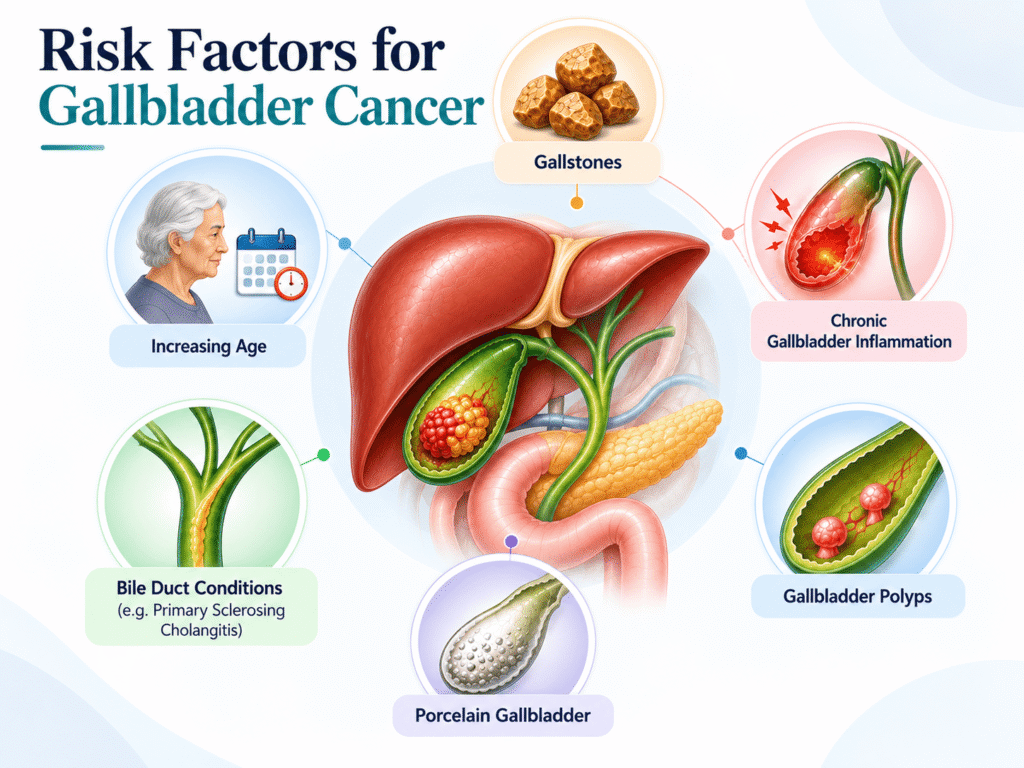
Risk Factors for Gallbladder Cancer
Gallbladder cancer is uncommon, and having a risk factor does not mean that cancer will develop. Recognised risk factors include:
- Gallstones: the most commonly recognised risk factor, although most people with gallstones do not develop cancer.
- Chronic gallbladder inflammation: long-term irritation may contribute to cellular changes.
- Gallbladder polyps: certain polyps may require closer evaluation.
- Porcelain gallbladder: calcium deposits in the gallbladder wall have been associated with increased risk.
- Bile duct conditions: including primary sclerosing cholangitis.
- Increasing age: gallbladder cancer occurs more frequently in older adults.
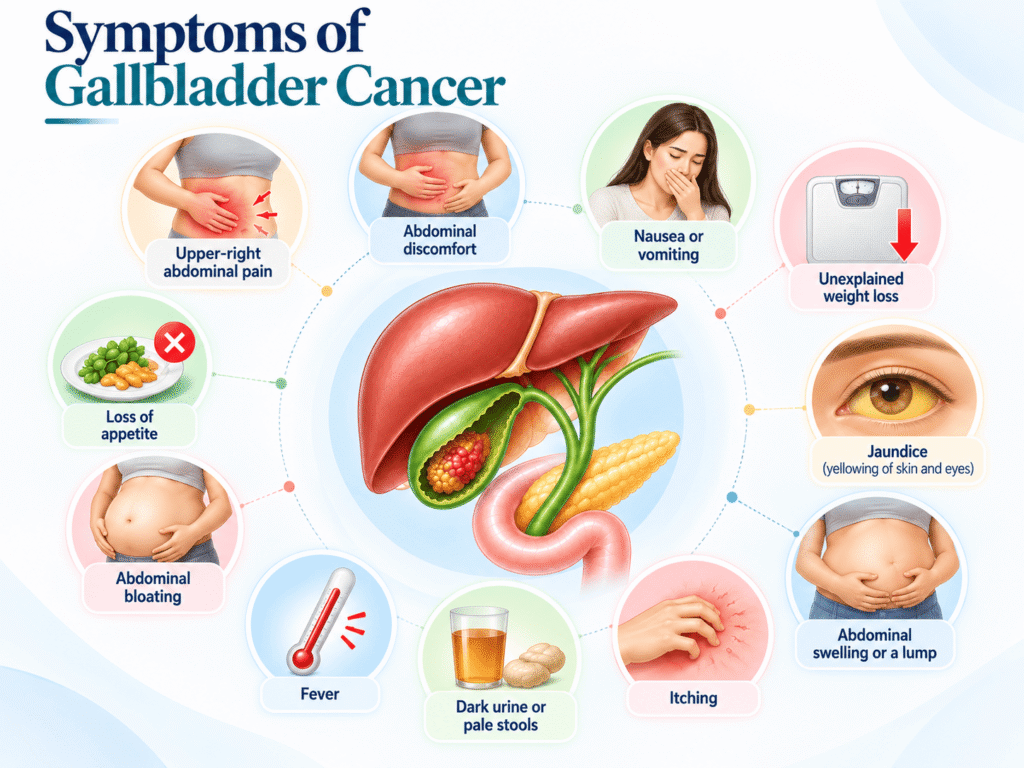
Symptoms of Gallbladder Cancer
Recognising Signs That Need Medical Evaluation
Gallbladder cancer may not produce noticeable symptoms initially. Possible symptoms include:
- Upper-right abdominal pain
- Persistent abdominal discomfort
- Nausea or vomiting
- Unexplained weight loss
- Loss of appetite
- Abdominal bloating
- Jaundice
- Abdominal swelling or a lump
- Fever
- Dark urine or pale stools
- Itching associated with jaundice
Jaundice may occur when a tumour interferes with bile flow. These symptoms can also have non-cancerous causes, so persistent or worsening symptoms should be medically evaluated.
How Is Gallbladder Cancer Diagnosed?
Diagnosis and staging help determine whether the cancer can be surgically removed.
Clinical Examination
Review of symptoms, medical history and physical findings.
Blood Tests
Liver function and blood chemistry tests may identify abnormalities involving the liver and biliary system.
Ultrasound
Can provide initial information about the gallbladder, gallstones, wall and surrounding structures.
CT Scan
Provides detailed images to assess the tumour, liver, lymph nodes and surrounding structures.
Biopsy & Pathology
Pathological examination identifies tumour type and characteristics. Cancer may also be discovered incidentally after gallbladder removal.
MRI / MRCP
Can provide additional detail about the gallbladder, bile ducts and surrounding anatomy.
Gallbladder Cancer Treatment Options
Treatment Planned According to Cancer Stage and Spread
The appropriate gallbladder cancer treatment in Gurgaon varies according to cancer stage, tumour location, spread, pathology and whether complete removal is possible.
- Surgery: Surgery may be considered when the cancer is localised or locally advanced and can potentially be completely removed.
- Chemotherapy: May be used before or after surgery in selected situations or when surgery is not possible.
- Radiation Therapy: May be considered in selected patients depending on disease stage and treatment objectives.
- Targeted Therapy & Immunotherapy: For some advanced cancers, systemic treatment may be considered based on tumour characteristics and molecular testing.
Types of Gallbladder Cancer Surgery
Surgery depends on tumour invasion, nearby tissue and lymph-node involvement, and whether complete removal is possible.
Simple Cholecystectomy
Removal of the gallbladder, which may be appropriate for selected very early cancers.
Extended Cholecystectomy
Removal of the gallbladder along with part of the adjacent liver and regional lymph nodes may be required for deeper tumour invasion.
Re-Excision Surgery
If cancer is unexpectedly found after previous gallbladder removal, further surgery may be considered based on pathology, stage and margins.
Why Choose Dr. Pushpinder Gulia?
Dr. Pushpinder Gulia provides surgical oncology care for gallbladder and hepatobiliary cancers, with treatment planning based on disease extent and individual patient factors.
23+ Years of Surgical Experience
Extensive experience in surgical oncology and complex cancer cases.
5,000+ Cancer Surgeries
Experience across a broad range of cancer surgeries.
Gallbladder & Hepatobiliary Cancer Surgery
Experience in surgical management of gallbladder and hepatobiliary cancers.
Personalised Treatment Planning
Treatment recommendations consider imaging, pathology, cancer stage and overall health.
Focus on Complete Cancer Removal
When surgery is appropriate, the objective is complete tumour removal with appropriate margins.
Minimally Invasive & Robotic Surgery
These approaches may be considered for selected patients and procedures when clinically appropriate.
Take the Next Step After a Gallbladder Cancer Diagnosis
Get Your Diagnosis Reviewed
A gallbladder cancer diagnosis requires careful evaluation before treatment is selected. The next step depends on the type, stage, location, lymph-node involvement and whether the cancer can be completely removed.
Dr. Pushpinder Gulia reviews imaging, pathology reports and previous medical records to determine an appropriate treatment strategy.
Patients diagnosed with gallbladder cancer, or those whose cancer was unexpectedly identified after gallbladder removal, should bring their pathology report, CT/MRI scans, ultrasound reports and previous medical records to the consultation.
Book a consultation with Dr. Pushpinder Gulia to discuss gallbladder cancer treatment in Gurgaon.
Frequently Asked Questions
Everything you need to know before your consultation
Is gallbladder cancer treatment possible without surgery? expand_more
Yes. Depending on the stage and resectability, treatment may involve chemotherapy, radiation therapy, systemic treatment or supportive care.
Is surgery possible for every gallbladder cancer patient? expand_more
No. Surgery depends on whether the tumour can be completely removed and whether there is extensive spread to distant organs or structures. Imaging and staging help determine surgical eligibility.
What is the main treatment for gallbladder cancer? expand_more
There is no single treatment for every patient. For selected localised cancers that can be completely removed, surgery is an important treatment option. Others may require chemotherapy, radiation or systemic treatment.
What is extended cholecystectomy? expand_more
It is a more extensive cancer operation than routine gallbladder removal and may include removal of the gallbladder, part of the adjacent liver and regional lymph nodes.
What happens if gallbladder cancer is found after gallbladder surgery? expand_more
The pathology report is reviewed for tumour type, depth of invasion and margins. Depending on the findings and stage, further surgery or other treatment may be considered.
What is the cost of gallbladder cancer treatment in Gurgaon? expand_more
The gallbladder cancer treatment cost in Gurgaon varies according to the treatment required, surgery complexity, hospitalisation, investigations, medicines and additional cancer treatments. A personalised estimate can be provided after evaluation.