
Colorectal Cancer Treatment in Gurgaon
Colorectal cancer develops in the colon or rectum and may require surgery, chemotherapy, radiation therapy or a combination of treatments. Dr. Pushpinder Gulia provides colorectal cancer treatment in Gurgaon, with treatment planned according to the cancer's location, stage, pathology and the patient's overall health.
Book an Appointment
Connect with our specialists for personalised guidance
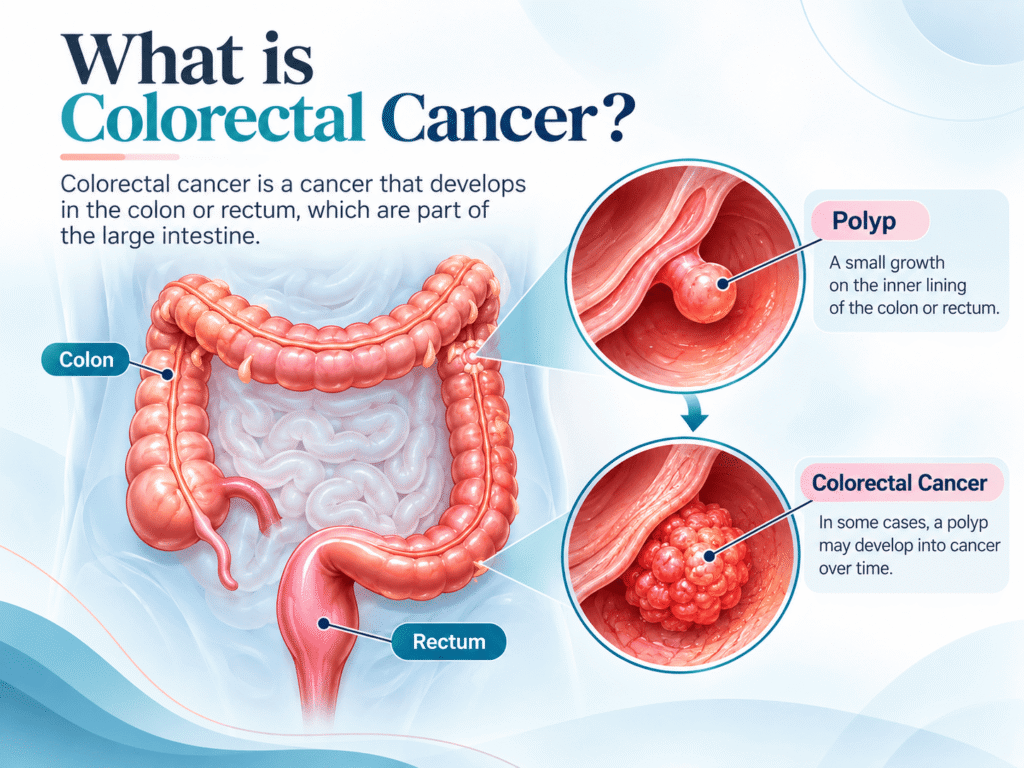
What is Colorectal Cancer?
Understanding Cancer of the Colon and Rectum
Colorectal cancer is a cancer that develops in the colon or rectum, which form part of the large intestine. It can begin as a polyp and, in some cases, develop into cancer over time.
Treatment depends on the location and size of the tumour, cancer stage, lymph node involvement and whether the disease has spread to other parts of the body.
For patients requiring surgery, colorectal cancer surgery in Gurgaon may involve removing the affected section of the bowel along with nearby lymph nodes.
Types of Colorectal Cancer
Different Types May Require Different Treatment Approaches
Colon Cancer
Cancer that develops in the colon. Surgery may involve removing the affected section of the colon and nearby lymph nodes.
Rectal Cancer
Cancer that develops in the rectum. Treatment planning depends on the tumour's location, stage and involvement of surrounding tissues.
Recurrent Colorectal Cancer
Cancer that returns after previous treatment may require further evaluation and, in selected cases, surgery or other cancer treatments.
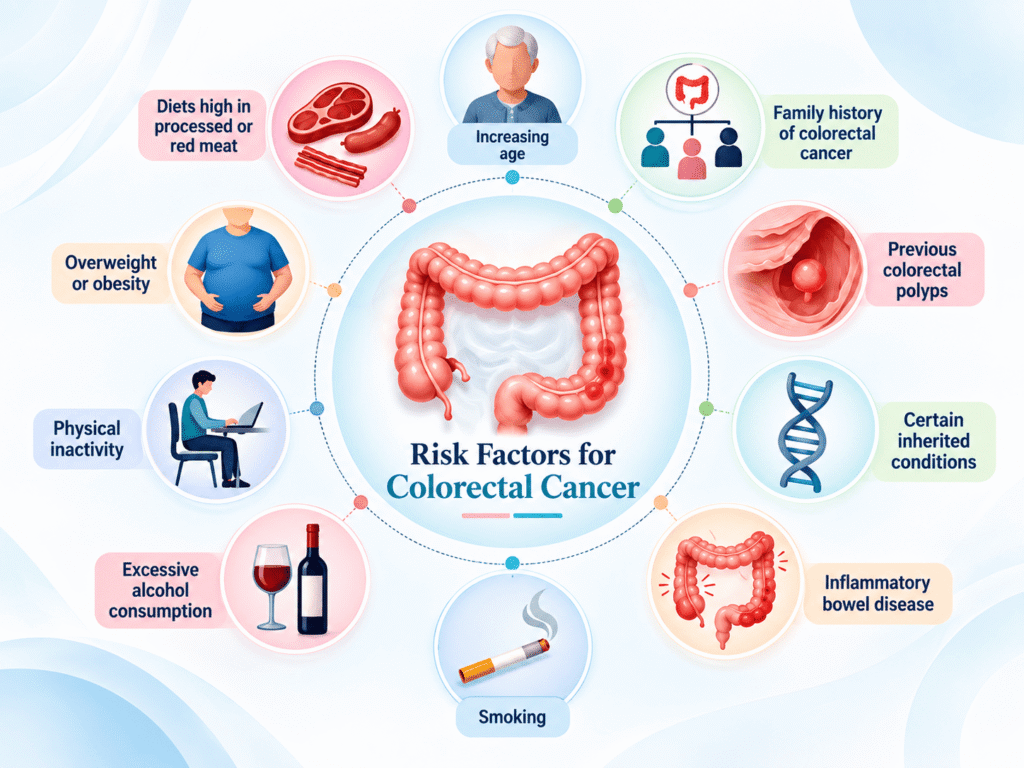
Risk Factors for Colorectal Cancer
There is no single cause of colorectal cancer. Certain factors may increase the risk, including:
- Increasing age
- Family history of colorectal cancer
- Previous colorectal polyps
- Certain inherited conditions
- Inflammatory bowel disease
- Smoking
- Excessive alcohol consumption
- Physical inactivity
- Overweight or obesity
- Diets high in processed or red meat
Having a risk factor does not mean that a person will develop colorectal cancer.
How is Colorectal Cancer Diagnosed?
Tests That Help Confirm the Diagnosis and Plan Treatment
Colonoscopy
Colonoscopy examines the colon and rectum and allows tissue samples to be taken when required.
Biopsy
A tissue sample is examined to confirm the presence and type of cancer.
CT Scan
A CT scan helps assess the extent of disease and identify possible spread to other organs.
MRI
MRI is particularly useful when assessing rectal cancer and surrounding tissues.
Blood Tests
Blood tests may form part of the overall assessment. CEA may also be used in selected patients for monitoring.
Colorectal Cancer Stages
Understanding the Extent of the Disease
The stage of colorectal cancer shows how far the cancer has grown or spread. It helps doctors plan the most appropriate colorectal cancer treatment.
STAGE I
Stage I colorectal cancer is limited to the inner layers of the colon or rectum and has not spread to nearby lymph nodes or distant organs. Surgery is often an important part of treatment.
STAGE II
In Stage II colorectal cancer, the tumour has grown deeper through the bowel wall but has not reached nearby lymph nodes. Colorectal cancer surgery may be recommended depending on the individual case.
STAGE III
Stage III colorectal cancer has spread to nearby lymph nodes but not to distant organs. Treatment may include colorectal cancer surgery and chemotherapy, depending on the patient's condition.
STAGE IV
In Stage IV colorectal cancer, the cancer has spread to distant organs such as the liver or lungs. Treatment may involve surgery, chemotherapy, targeted therapy or immunotherapy based on the extent of the disease.
Colorectal Cancer Surgery In Gurgaon
Surgical Treatment for Colon and Rectal Cancer
Surgery is an important treatment for many patients with localised colorectal cancer. The type of colorectal cancer surgery in Gurgaon depends on the tumour's location, size, stage and involvement of nearby tissues.
- Partial Colectomy: Removal of the section of the colon containing the tumour, along with nearby lymph nodes.
- Right or Left Hemicolectomy: Removal of the affected right or left section of the colon depending on the location of the cancer.
- Low Anterior Resection: A surgical option for selected rectal cancers that may allow preservation of the anal sphincter.
- Minimally Invasive Surgery: Laparoscopic surgery may be considered for selected patients depending on the tumour and individual clinical factors.
Why Choose Dr. Pushpinder Gulia?
Experienced Surgical Oncology Care for Colorectal Cancer
23+ Years of Surgical Oncology Experience
Dr. Pushpinder Gulia brings 23+ years of experience in surgical oncology, with expertise in the surgical management of gastrointestinal and other cancers.
5,000+ Cancer Surgeries
With experience across 5,000+ cancer surgeries, he provides surgical evaluation and treatment planning for patients requiring colorectal cancer surgery in Gurgaon.
Personalised & Multidisciplinary Cancer Care
Treatment is planned according to the cancer type, stage, pathology and imaging findings, with multidisciplinary care considered where required for comprehensive colorectal cancer treatment in Gurgaon.
When Should You See a Colorectal Cancer Specialist?
You should consider a medical evaluation if you dexperience persistent:
- Blood in the stool
- Changes in bowel habits
- Abdominal discomfort
- Unexplained weight loss
- Persistent weakness or tiredness
If you have already received a colorectal cancer diagnosis, a consultation with a colorectal cancer surgeon in Gurgaon can help you understand your diagnosis and available treatment options.

Frequently Asked Questions
Answers to Common Questions About Colorectal Cancer
Is colorectal cancer treatable? expand_more
Many colorectal cancers can be treated, particularly when detected at an earlier stage. Treatment depends on the cancer stage, location, tumour characteristics and overall health.
Does every colorectal cancer patient need surgery? expand_more
No. Treatment varies according to the type and stage of cancer. Some early lesions may be removed during colonoscopy, while others require surgery or additional treatments.
Is colorectal cancer surgery possible through laparoscopy? expand_more
Selected patients may be suitable for laparoscopic or minimally invasive surgery. The appropriate approach depends on the tumour and individual clinical factors.
Will I need a colostomy after colorectal cancer surgery? expand_more
Not every patient requires a colostomy. In some cases, the bowel can be joined after removing the tumour. A temporary or permanent stoma may be required depending on the surgery.
Can rectal cancer be treated without removing the anus? expand_more
In selected patients, sphincter-preserving surgery may be possible. This depends on the tumour's location, size, stage and involvement of nearby structures.
What should I bring to my consultation? expand_more
Bring your biopsy or pathology report, colonoscopy report, CT/MRI/PET-CT scans, blood reports and details of previous treatment.
 WhatsApp