
When Should You Get a Second Opinion Before Cancer Surgery?
Hearing the words “you need cancer surgery” can change everything in a moment. You may find yourself wondering, Is surgery really my only option? Am I making the right choice? What if there’s another way?
Getting a second opinion before cancer surgery can give you something you may need most at that moment: clarity and reassurance. It doesn’t mean your first doctor was wrong; it simply gives you another expert perspective before making a life-changing decision.
With 23+ years of experience in surgical oncology, Dr. Pushpinder Gulia provides personalised second opinion s to help patients understand their diagnosis and surgical options. But when should you seek one, and what could a second opinion actually change? Keep reading till the end!
Why Should You Get a Second Opinion for Cancer Surgery?
A second opinion for cancer surgery gives you an independent review of your diagnosis, cancer stage, scans, pathology, and proposed surgery—helping you understand whether the recommended approach is right for you or whether other options should be considered. It can help you:
- Confirm the diagnosis and stage through a fresh review of pathology and imaging.
- Understand why surgery is recommended and what the procedure involves.
- Explore alternative approaches, including less invasive or organ-preserving options where appropriate.
- Understand the risks, benefits, and expected recovery before undergoing major surgery.
- Access specialised expertise for rare, complex, or difficult-to-treat cancers.
- Feel more confident about your treatment decision, even when the second opinion confirms the original plan.
When Is a Second Opinion Especially Helpful?
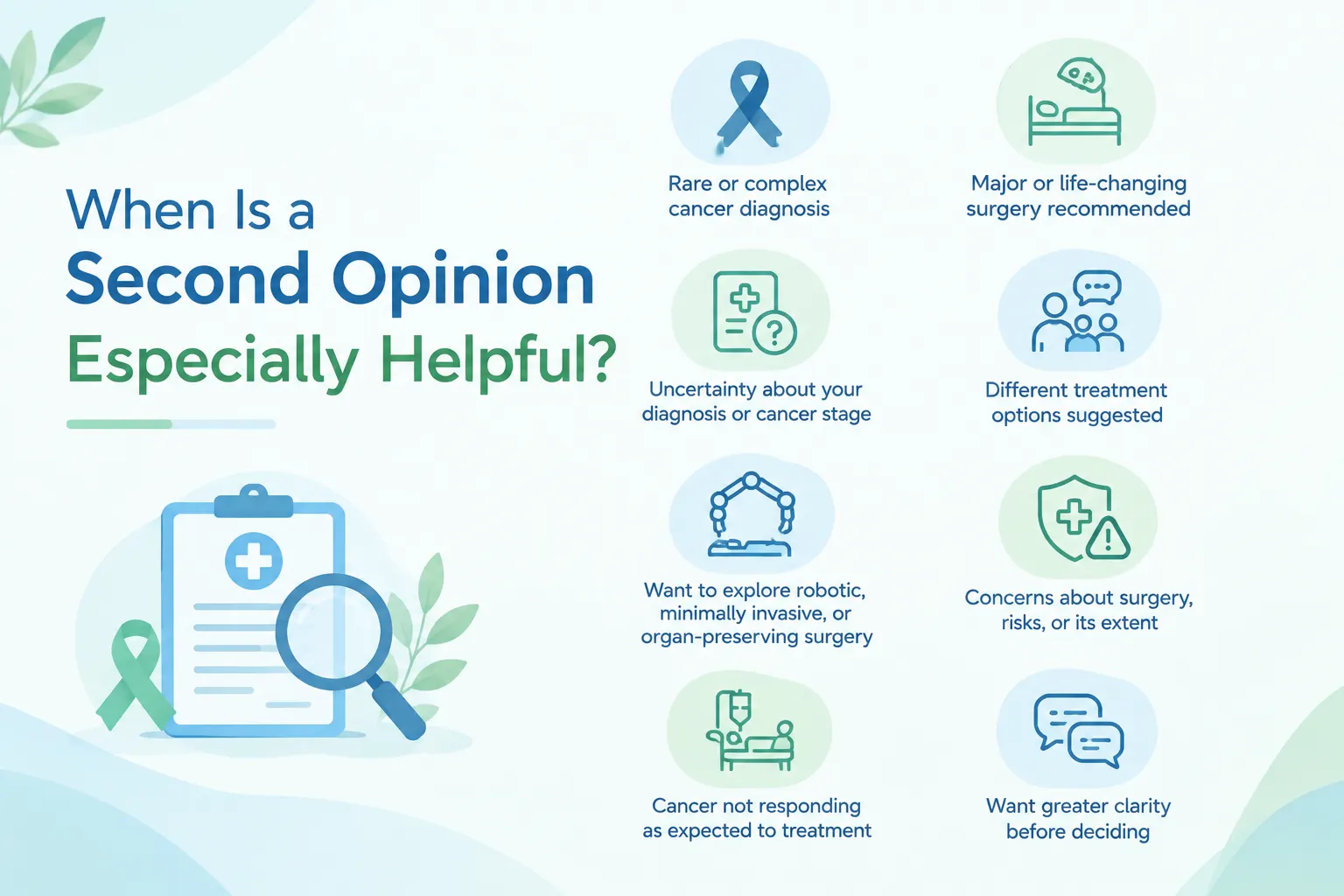
There isn’t one rule that says every person with cancer must get a second opinion. However, there are situations where speaking with another specialist can be particularly helpful. Consider getting another expert opinion if:
- You have been diagnosed with a rare or complex cancer
- A major or life-changing surgery has been recommended
- You are unsure about the diagnosis or cancer stage
- Different treatment options have been suggested
- You want to explore minimally invasive, robotic, or organ-preserving surgery
- You have concerns about the risks or extent of the proposed surgery
- Your cancer has not responded as expected to ongoing treatment
- You simply want greater clarity before making an important decision
A second opinion is also reasonable when you simply want reassurance before proceeding. It is a normal part of cancer decision-making and does not necessarily mean that the first recommendation was incorrect.
What Difference Does a Second Opinion Make?
The biggest benefit of a second opinion is often not a completely different treatment plan; it is clarity. You may understand your diagnosis better, learn why a particular operation has been recommended, or discover that another approach could be suitable in your situation.
- Confirm the proposed surgery
- Determine whether surgery should be combined with other treatments
- Understand whether minimally invasive or robotic surgery is appropriate
- Explore treatment at a specialised cancer centre
- Ask questions you may not have thought of during the first consultation
Most importantly, the outcome does not always have to be a different treatment. If the second surgeon agrees with the original recommendation, you gain additional confidence that you are moving in the right direction.
Can a Second Opinion Change Your Cancer Treatment Plan?
One of the questions patients often have is: “What if the second surgeon recommends something completely different?”
It can happen, but it doesn’t happen in every case. A second opinion may lead to a change in the treatment plan, or it may simply confirm that the original recommendation is appropriate.
Depending on your individual case, the second specialist may recommend:
- A different type or extent of surgery
- A minimally invasive or robotic approach, when suitable
- Additional testing or pathology review
- Chemotherapy or radiation before surgery
- A different combination of treatments
- Referral to a specialist with experience in your specific cancer
- The same treatment plan, with greater reassurance that it is appropriate
If the two opinions differ, ask both specialists to explain why their recommendations are different, what evidence supports each approach, and what the potential benefits and risks are.
How to Choose the Right Surgical Oncologist for a Second Opinion?
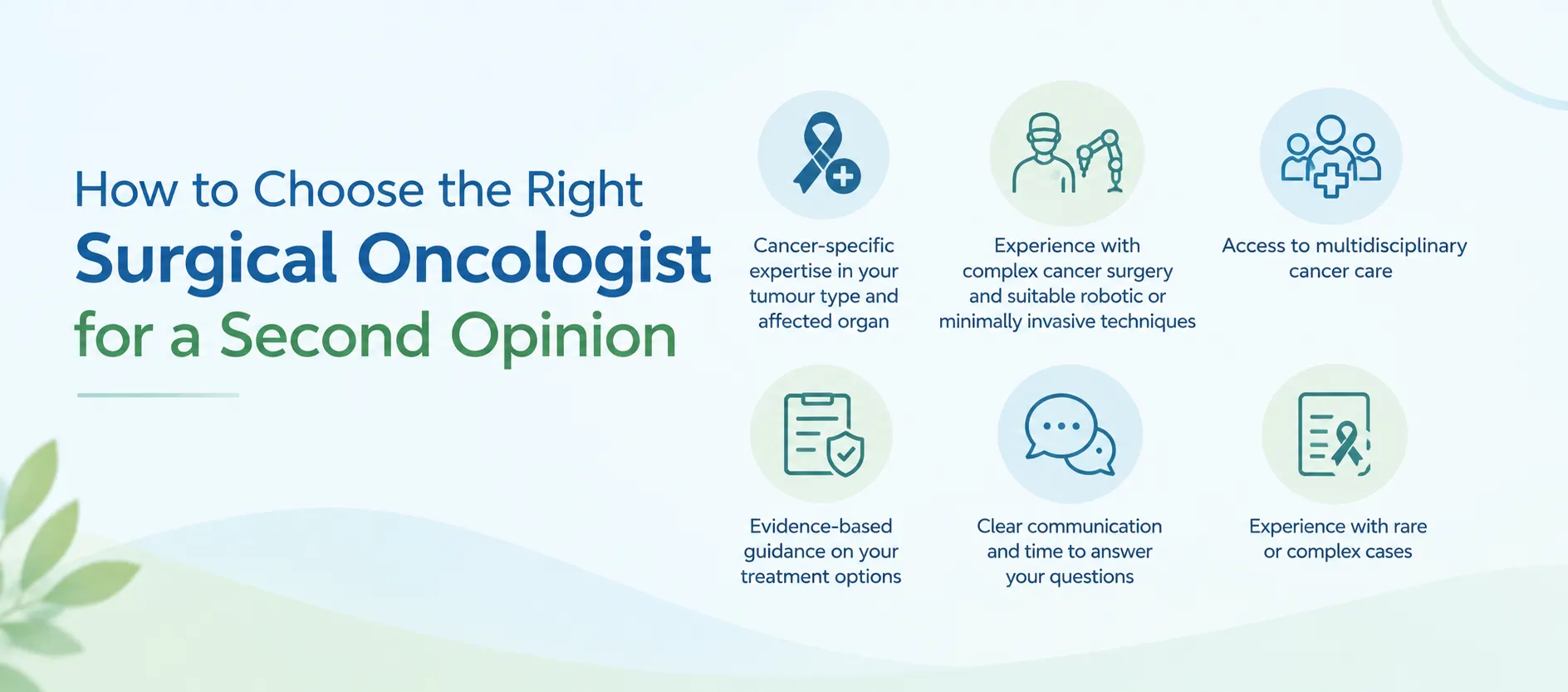
Choose a surgical oncologist who has specific experience with your type of cancer and the procedure being considered, not just general surgical experience. Look for a specialist who has:
- Relevant cancer-specific expertise in your tumour type and affected organ
- Experience with complex cancer surgeries similar to the one being proposed
- Expertise in appropriate minimally invasive or robotic techniques
- Access to multidisciplinary cancer care, including medical and radiation oncology
- A clear, evidence-based approach to explaining treatment options
- Good communication skills and enough time to address your questions
- Experience managing cases similar to yours, particularly for rare or complex cancers
For your consultation, take your biopsy and pathology reports, scan reports and images, blood test results, previous treatment records, and the proposed treatment plan. Having the complete medical information allows the second specialist to review your case more accurately.
How Dr. Pushpinder Can Help You With A Second Opinion?
Dr. Pushpinder Gulia offers a personalised second opinion for cancer surgery, helping you understand your diagnosis, evaluate the proposed surgery, and explore suitable treatment approaches based on your cancer and individual needs.
Dr. Pushpinder Gulia can review your pathology, scans, cancer stage, and proposed treatment plan, while helping you understand whether robotic, minimally invasive, or open surgery may be appropriate.
For breast cancer, he can also guide you on breast-conserving surgery, mastectomy, lymph node procedures, and oncoplastic approaches where suitable. His recommendations are personalised to your cancer type, stage, overall health, and treatment goals, helping you understand your options and make a more informed decision.
Considering a Second Opinion Before Cancer Surgery?
A second opinion can help you understand your cancer surgery options with greater clarity and confidence. Whether it confirms the original recommendation or offers another approach, an expert review can help you make a more informed treatment decision.
Seeking an appointment with a surgical oncologist in Gurgaon? Consult Dr. Pushpinder Gulia to discuss your diagnosis, surgical options, and treatment plan.
Medical Disclaimer: This content is for general information only and does not replace professional medical advice, diagnosis, or treatment.

 WhatsApp