
Cancer Surgery: 7 Factors Your Oncologist Considers
According to the Lancet Oncology Commission on Global Cancer Surgery report, cancer surgery is used at some stage in the treatment of around 80% of all solid tumours, particularly when the cancer is localised and can be safely removed. Cancer surgery may involve removing the tumour, reducing its size, or relieving cancer-related symptoms, depending on the cancer and its stage.
However, surgery is not suitable for every patient. Before recommending it, an oncologist considers several factors, including the type and stage of cancer, tumour location, overall health, need for other treatments, and expected outcomes.
With 20+ years of experience in surgical oncology, Dr. Pushpinder Gulia offers personalised cancer surgery based on each patient’s condition, treatment needs, and goals. But what exactly goes into this decision? Let’s look at the 7 key factors your oncologist considers before recommending cancer surgery.
When Is Cancer Surgery Recommended?
Cancer surgery may be recommended when removing a tumour can help control the disease, improve the chances of cure, or relieve symptoms. It may be used to:
- Remove the tumour completely
- Reduce tumour size
- Relieve cancer-related symptoms
- Support chemotherapy or radiation therapy
- Help diagnose or assess the extent of cancer in selected cases

However, surgery is not suitable for every patient. The decision depends on the cancer, its stage, tumour location, overall health, and treatment goals. Here are the 7 factors a surgical oncologist considers before deciding on cancer surgery:
1. What Type of Cancer Do You Have?
The type of cancer gives your oncologist the first indication of whether surgery may be useful. Your doctor also looks at the biopsy and pathology findings to understand the tumour better.
Key factors include:
- Cancer type: Different cancers grow and spread differently, so surgery may play a different role in each case.
- Biopsy and pathology results: These confirm the type of cancer and provide important information about the tumour.
- Tumour characteristics: Features such as how the tumour cells look and behave may help guide the treatment plan.
2. What Stage Is Your Cancer?
Cancer stage helps your oncologist understand how advanced the disease is and whether it may be possible to remove it through surgery.
Key factors include:
- How far the cancer has spread: Doctors check whether the cancer is limited to the original site, has reached nearby lymph nodes, or has spread to distant organs.
- Imaging and staging tests: CT, MRI, PET-CT, ultrasound, and other tests can help show the size and extent of the cancer.
- How stage affects surgery: Localised cancers may be more suitable for surgery, while advanced cancers may require other treatments before or instead of surgery.
3. Where Is the Tumour Located?
The tumour’s exact location can affect both the possibility and extent of surgery. Your surgeon needs to know what structures are around the tumour before planning the procedure.
Key factors include:
- Tumour size and location: The size and position of the tumour can affect whether it can be removed and how extensive the surgery needs to be.
- Nearby organs and structures: Doctors assess whether the tumour is close to important organs, blood vessels, nerves, or other structures.
- Whether it can be safely removed: The goal is to remove the cancer as completely as possible while protecting healthy tissue and important body functions.
4. Do You Need Treatment Before Surgery?
For some patients, surgery is not the first step. Treatment may be recommended beforehand to shrink the tumour, control the cancer, or make surgery more effective.
This may involve:
- Chemotherapy: May help shrink or control the tumour before surgery.
- Radiation therapy: Can sometimes reduce or control cancer in and around the tumour before an operation.
- Targeted therapy or immunotherapy: May be considered for certain cancers based on their specific characteristics.
- Why treatment may come first: Pre-surgery treatment can sometimes make a tumour easier to remove or improve the chances of a successful operation.
5. Are You Fit Enough for Cancer Surgery?
Your overall health is an important part of the surgical decision. Even when surgery may help treat the cancer, your doctor must also consider whether you can safely undergo the procedure and recover from it.
Your medical team may assess:
- Overall health: Your general fitness and physical condition.
- Heart, lungs, kidneys, and liver: The function of these organs may affect your ability to tolerate surgery and anaesthesia.
- Nutrition and fitness: Good nutrition and physical strength can support healing and recovery.
- Existing medical conditions: Conditions such as diabetes, heart disease, or breathing problems may need to be managed before surgery.
6. Which Type of Cancer Surgery Is Right for You?
If surgery is recommended, your surgeon will also decide which approach is most appropriate. The choice depends on the cancer, tumour, and your individual health.
Possible approaches include:
- Open surgery: May be recommended for larger or more complex tumours that require wider access.
- Laparoscopic or minimally invasive surgery: Uses smaller incisions and may be suitable for selected cancers.
- Robotic-assisted surgery: May be considered for certain procedures where precise, minimally invasive surgery is possible.
- How the approach is selected: Your surgeon considers tumour size and location, cancer type, complexity, and your overall health. The priority is safe and effective cancer removal.
7. What Are Your Treatment Goals?
The final decision also depends on what the treatment is expected to achieve and how surgery may affect your life. Your oncologist will balance the potential benefits with the possible risks.
Important considerations include:
- Expected benefits: Surgery may aim to remove the cancer, control the disease, reduce the tumour, or relieve symptoms.
- Risks and recovery: Your doctor will explain possible complications, recovery time, and the demands of surgery.
- Quality of life: The possible effect on movement, function, appearance, or daily activities may be considered.
- Patient preferences: Your concerns, priorities, and treatment preferences should also be part of the decision.
Questions to Ask Your Cancer Surgeon
Before choosing cancer surgery, asking the right questions can help you understand your treatment plan and what to expect. Consider asking:
- What is the goal of my surgery?
- Can the tumour be removed completely?
- Do I need chemotherapy or radiation before surgery?
- Which surgical approach is suitable for me and why?
- What are the possible risks and complications?
- How long might recovery take?
- Will I need additional treatment after surgery?
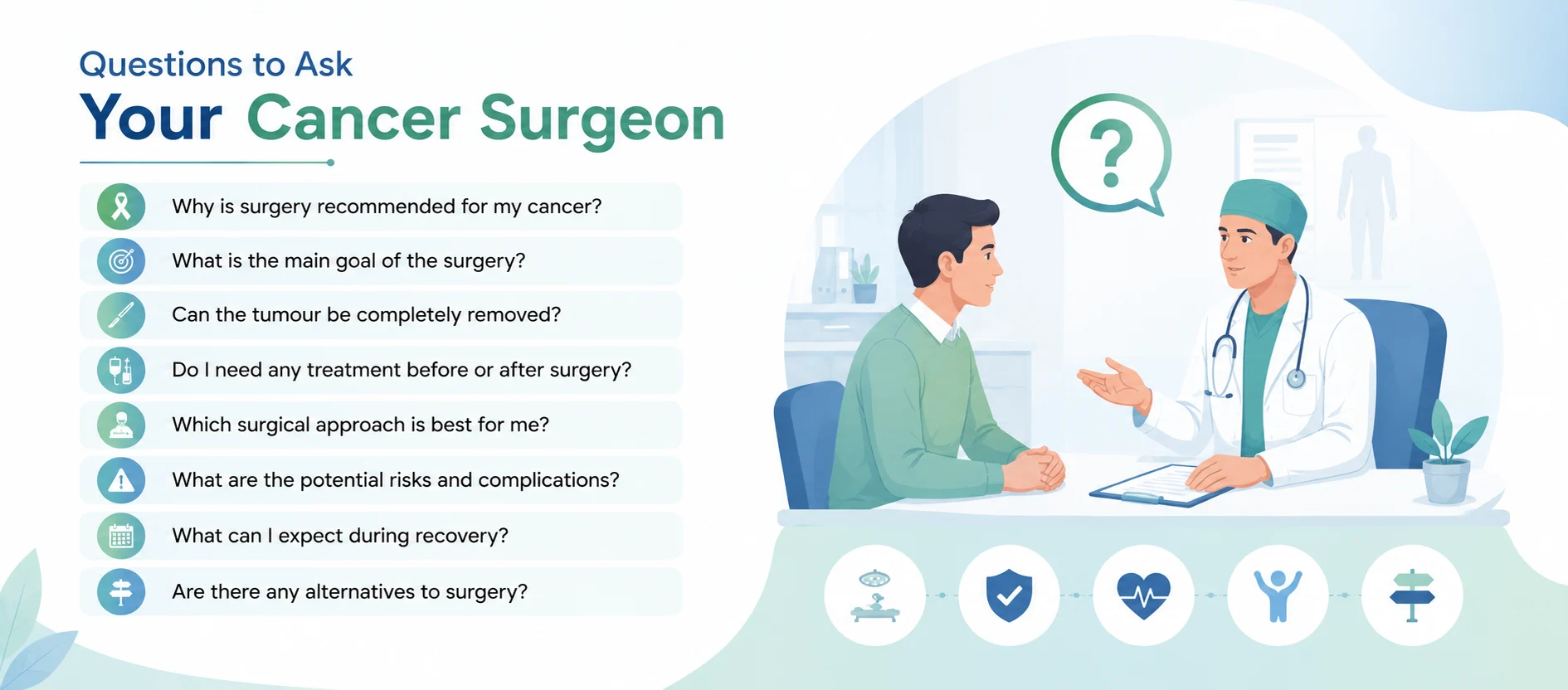
Asking these questions can help you and your surgical oncologist achieve better clarity on your treatment options.
Why Choose Dr. Pushpinder Gulia for Cancer Surgery in Gurgaon?
Dr. Pushpinder Gulia brings 20+ years of experience in surgical oncology, offering personalised cancer surgery based on each patient’s condition and treatment goals.
- 20+ Years of Experience: Extensive expertise in surgical oncology.
- Robotic & Open Surgery: Surgical options based on the cancer and the patient’s needs.
- Breast Cancer Surgery: Expertise in breast-conserving surgery and mastectomy.
- Oncoplastic Surgery: Cancer removal with breast reshaping when appropriate.
- Personalised Care: Treatment plans tailored to the cancer type, stage, and individual needs.
Confused if Cancer Surgery is Right For You?
The decision to undergo cancer surgery depends on your cancer type, stage, overall health, and treatment goals. An experienced surgical oncologist can assess your condition and explain whether surgery is the right option for you.
Consult Dr. Pushpinder Gulia for a personalised cancer surgery evaluation in Gurgaon and understand your treatment options.

 WhatsApp