
GI Cancer Symptoms: Early Signs, Diagnosis and When to See a Specialist
Gastrointestinal (GI) cancer refers to cancers that develop in the digestive system, including the stomach, intestines, oesophagus, liver, pancreas, and other digestive organs. Recognising unusual digestive symptoms, understanding the risk factors, and seeking timely medical evaluation can help patients receive an appropriate diagnosis and treatment plan.
The following guide covers the major types of GI cancer, their symptoms, diagnostic tests, treatment options, and the importance of consulting an experienced GI cancer specialist.
What Is Gastrointestinal (GI) Cancer?
Gastrointestinal cancer, commonly called GI cancer, refers to cancer that develops in the digestive tract or associated digestive organs. It occurs when abnormal cells grow uncontrollably, potentially forming a tumour that can invade nearby tissues or spread to other parts of the body.
The digestive system helps break down food, absorb nutrients, and eliminate waste. Depending on where the cancer develops, it may affect digestion, bowel movements, appetite, and overall health. GI cancers include several distinct types, each with its own symptoms and treatment requirements.
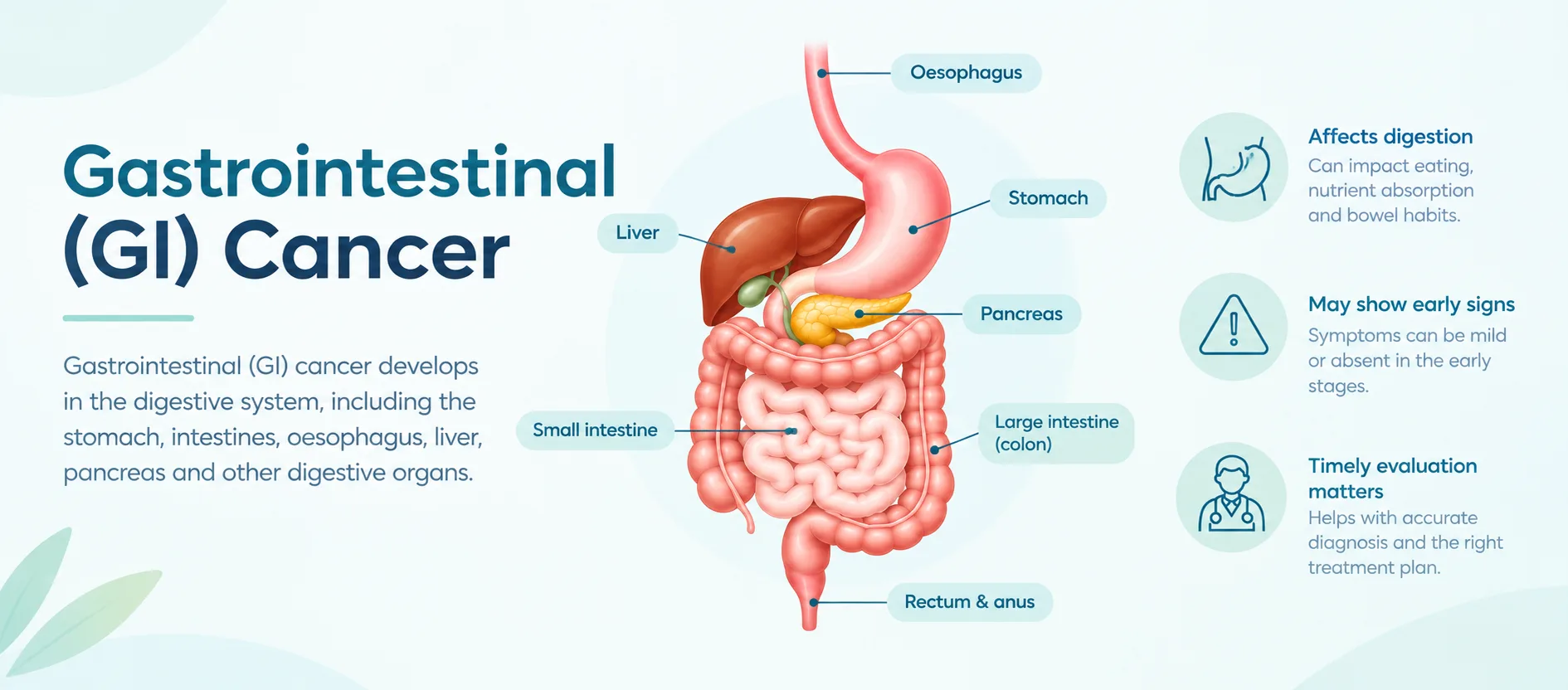
Which Organs Can Be Affected by GI Cancer?
The main types of gastrointestinal cancer include:
- Oesophageal cancer: Develops in the oesophagus, the tube that carries food from the mouth to the stomach.
- Stomach cancer: Also called gastric cancer, it begins in the stomach lining.
- Colorectal cancer: Affects the colon (large intestine) or rectum.
- Small intestine cancer: Develops in the small intestine, where most nutrient absorption takes place.
- Liver cancer: Begins in the liver, an organ that processes nutrients and produces bile.
- Pancreatic cancer: Develops in the pancreas, which produces digestive enzymes and hormones.
- Gallbladder and bile duct cancers: Affect organs and ducts involved in storing or transporting bile.
- Anal cancer: Develops in the anal canal, the final part of the digestive tract.
The symptoms, risk factors, and treatment approach vary according to the organ affected, the cancer type, and the stage at diagnosis.
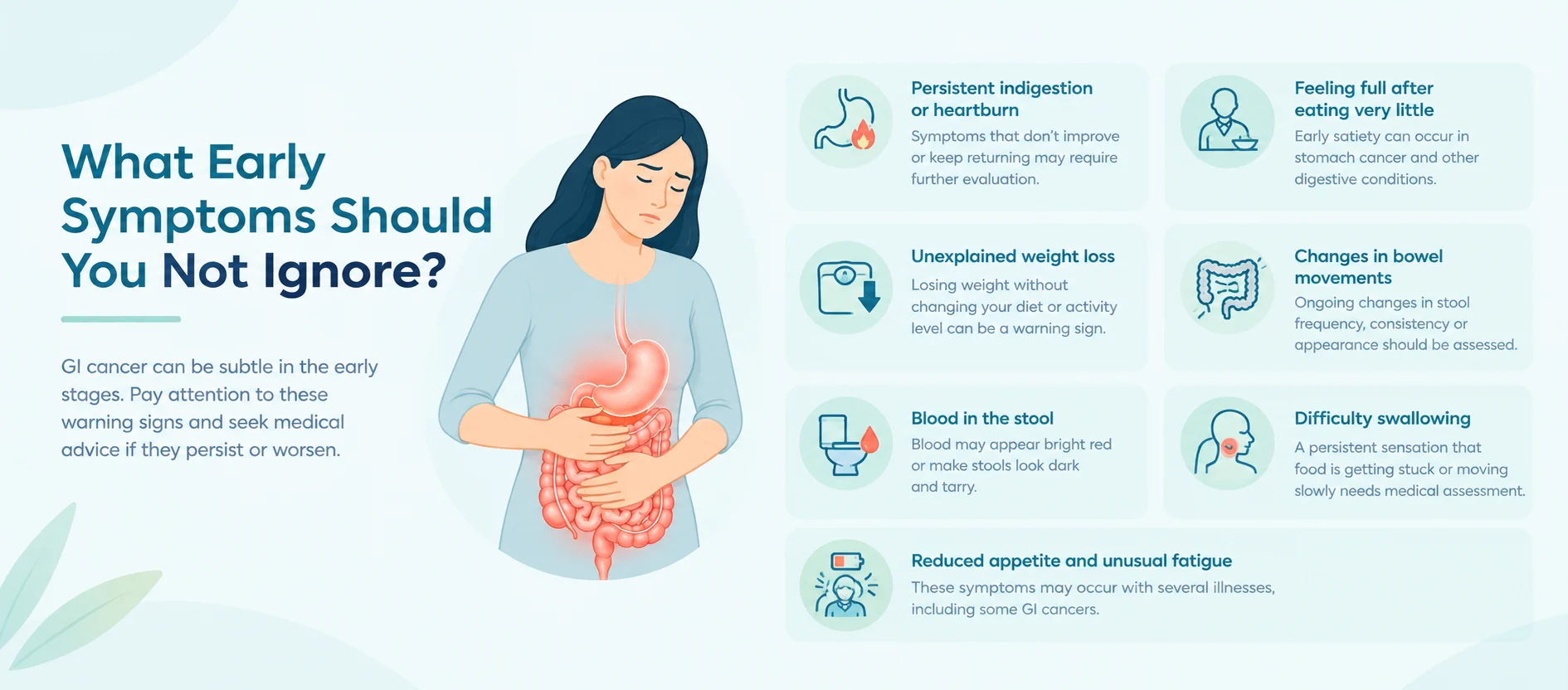
What Early Symptoms Should You Not Ignore?
Early GI cancer symptoms can be subtle and may resemble common digestive problems. For example, occasional indigestion is common, but indigestion that persists, worsens, or occurs alongside other unexplained symptoms deserves medical attention.
Pay attention to the following changes:
- Persistent indigestion or heartburn: Symptoms that don’t improve or keep returning may require further evaluation.
- Feeling full after eating very little: Early satiety can occur in stomach cancer and other digestive conditions.
- Unexplained weight loss: Losing weight without changing your diet or activity level can be a warning sign.
- Changes in bowel movements: Ongoing changes in stool frequency, consistency or appearance should be assessed.
- Blood in the stool: Blood may appear bright red or make stools look dark and tarry.
- Difficulty swallowing: A persistent sensation that food is getting stuck or moving slowly needs medical assessment.
- Reduced appetite and unusual fatigue: These symptoms may occur with several illnesses, including some GI cancers.
Not everyone with GI cancer experiences early warning signs, and no single symptom can confirm a diagnosis. The appropriate next step depends on the symptoms, medical history, and clinical examination.
What Symptoms Can Different Types of GI Cancer Cause?
Because GI cancers affect different organs, their symptoms often differ depending on the location and extent of the tumour. Here is the tabular distinction between the cancers and symptoms associated with them:
| Type of Cancer | Possible Symptoms |
| Oesophageal cancer | Difficulty swallowing, painful swallowing, chest discomfort or unexplained weight loss |
| Stomach cancer | Persistent indigestion, upper abdominal pain, bloating, early fullness, nausea or loss of appetite |
| Colorectal cancer | Blood in the stool, persistent changes in bowel habits, abdominal cramps, fatigue or unexplained weight loss |
| Small intestine cancer | Abdominal pain, nausea, vomiting, unexplained anaemia or signs of intestinal obstruction |
| Liver cancer | Upper abdominal discomfort, abdominal swelling, jaundice, reduced appetite or weight loss |
| Pancreatic cancer | Upper abdominal or back pain, jaundice, dark urine, pale stools or unexplained weight loss |
| Gallbladder or bile duct cancer | Jaundice, itching, abdominal discomfort, nausea or loss of appetite |
| Anal cancer | Rectal bleeding, pain, itching, a lump near the anus or changes in bowel habits |
These symptoms are not specific to cancer, and some GI cancers may cause few noticeable symptoms initially. A specialist may recommend targeted investigations based on the symptoms and suspected organ involved.
When Should You See a Doctor for GI Cancer Symptoms?
You should arrange a medical consultation if you experience persistent or unexplained digestive symptoms, particularly if they are getting worse or occur alongside weight loss, reduced appetite, unusual fatigue, or changes in bowel movements.
Seek prompt medical evaluation for symptoms such as:
- Blood in your stool or black, tarry stools.
- Difficulty swallowing that persists or worsens.
- Unexplained weight loss.
- Persistent abdominal pain or swelling.
- Jaundice or yellowing of the eyes.
- Repeated vomiting or ongoing changes in bowel habits.
How Is GI Cancer Diagnosed?
Diagnosing GI cancer involves identifying the affected organ, confirming whether cancer is present and determining how far it has spread. The investigations recommended depend on the symptoms, clinical findings and suspected cancer type.
Common diagnostic tests include:
- Medical history and physical examination: The doctor reviews symptoms, family history, risk factors and relevant medical conditions.
- Blood tests: These may help identify anaemia, liver abnormalities, or other changes. Certain tumour markers may be useful in selected cases, but blood tests alone generally cannot confirm or rule out GI cancer.
- Endoscopy: A flexible tube with a camera is used to examine the upper digestive tract, including the oesophagus and stomach.
- Colonoscopy: A camera is used to examine the colon and rectum for abnormal growths, polyps or other changes.
- Imaging tests: CT scans, MRI, ultrasound or PET-CT may be used when appropriate to assess tumours and check for possible spread.
- Biopsy: A tissue sample is examined under a microscope to determine whether cancer cells are present and, in many cases, identify the cancer type.
- Cancer staging and additional testing: Once cancer is confirmed, further investigations help establish its stage and guide treatment planning. Some patients may need molecular or genetic testing.
Not every patient requires every test. A specialist selects investigations based on the suspected diagnosis and the information needed to plan treatment.
What Are the Treatment Options for GI Cancer?
GI cancer treatment depends on the affected organ, cancer type, stage, tumour location, overall health, and the patient’s treatment goals. A specialist may recommend one treatment or a combination of approaches. Most effective and common GI cancer treatment options include:
| Treatment | How it may help |
| Surgery | Removes the tumour and, when required, nearby tissue or lymph nodes. |
| Chemotherapy | Uses medicines to destroy cancer cells or control their growth. |
| Radiation therapy | Uses high-energy radiation to damage cancer cells in selected cancers. |
| Targeted therapy | Targets specific features of cancer cells, where suitable biomarkers are present. |
| Immunotherapy | Helps the immune system recognise and attack certain cancer cells. |
| Supportive and palliative care | Helps manage symptoms, treatment side effects, pain, and nutritional needs. |
When Is Surgery Recommended for GI Cancer?
Surgery may be recommended when a GI cancer can be safely removed. Depending on the cancer type and stage, the procedure may involve removing part of the affected organ. Minimally invasive or robotic-assisted surgery may be suitable for selected patients. Chemotherapy or radiation therapy may also be recommended before or after surgery.
Why Is Early Detection Important in GI Cancer?
Early detection can improve treatment options and help prevent complications. Its benefits include:
- More treatment options: Early-stage cancers may be easier to treat.
- Better treatment planning: Accurate diagnosis helps specialists choose appropriate care.
- Reduced complications: Timely treatment may help prevent bleeding or digestive tract obstruction.
- Potentially less extensive treatment: Some early cancers may require less extensive procedures.
Screening can detect certain cancers, such as colorectal cancer, before symptoms appear. Consult a doctor about persistent symptoms and screening based on your age and risk factors.
Why Choose Dr. Pushpinder Gulia for GI Cancer Surgery in Gurgaon?
Choosing a surgical oncologist is an important step in GI cancer treatment. Dr. Pushpinder Gulia offers experience in cancer surgery, with treatment planning tailored to the cancer type, stage, and overall health.
- 23+ Years of Experience: Extensive experience in surgical oncology and complex cancer surgeries.
- 5,000+ Cancer Surgeries: Experience across a wide range of cancer surgeries.
- Robotic and Minimally Invasive Surgery: Advanced surgical techniques for suitable GI cancer cases.
- Complex GI Cancer Procedures: Surgical planning for complex gastrointestinal cancers.
- Organ-Preserving Approach: Focus on preserving healthy tissue and organ function whenever medically appropriate.
Take the Next Step Towards Better Digestive Health
Persistent digestive symptoms should not be ignored. Early medical evaluation can help identify the cause and guide appropriate treatment. Consult Dr. Pushpinder Gulia, Surgical Oncologist in Gurgaon, for expert evaluation and personalised GI cancer treatment planning.

 WhatsApp