
Robotic Cancer Surgery vs Open Surgery: Key Differences
If you have been advised to undergo cancer surgery, you may wonder whether robotic surgery is better than traditional open surgery. The answer depends on your cancer type, tumour location, stage, and overall health.
Robotic surgery has become increasingly common in modern cancer care. A National Institutes of Health (NIH)-indexed study found that robotic surgery use in general surgery increased from 1.8% in 2012 to 15.1% in 2018. This growing adoption has also increased interest in robotic cancer surgery in Gurgaon.
Robotic-assisted surgery uses small incisions, specialised instruments, and a magnified 3D view to help surgeons perform precise procedures. However, robotic surgery is not automatically the best option for every cancer, and the approach should be selected based on the patient’s condition and treatment needs.
For patients considering cancer surgery in Gurgaon, Dr. Pushpinder Gulia, with 20+ years of experience in surgical oncology, offers personalised surgical care, including robotic and open procedures, based on the cancer type, stage, and individual treatment goals.
What is Robotic Cancer Surgery?
Robotic cancer surgery is a minimally invasive procedure performed through small incisions. The surgeon controls robotic instruments from a console rather than operating directly with their hands.
The system provides a magnified 3D view and precise instrument movement, helping the surgeon work around delicate or hard-to-reach areas. For appropriately selected patients, robotic surgery may offer smaller incisions, less postoperative pain, lower blood loss, and a faster recovery.

What is Open Cancer Surgery?
Open surgery is the traditional approach to cancer treatment. It involves making a larger incision to directly access the tumour and surrounding tissues.
It may be recommended for large or complex tumours that require wider access. Open surgery remains an important option for many cancer patients. Because the incision is larger, recovery may involve more pain, a longer hospital stay, and a longer healing period.

How Is Robotic Surgery Different from Open Surgery?
The main difference is how the surgeon reaches the tumour.
Robotic surgery uses small incisions, a camera, and specialised instruments controlled by the surgeon. Open surgery uses a larger incision to provide direct access to the surgical area.
For suitable patients, robotic surgery may offer some recovery-related advantages. But the goal of both approaches remains the same: to remove the cancer safely and effectively.
Some of the differences patients may notice include:
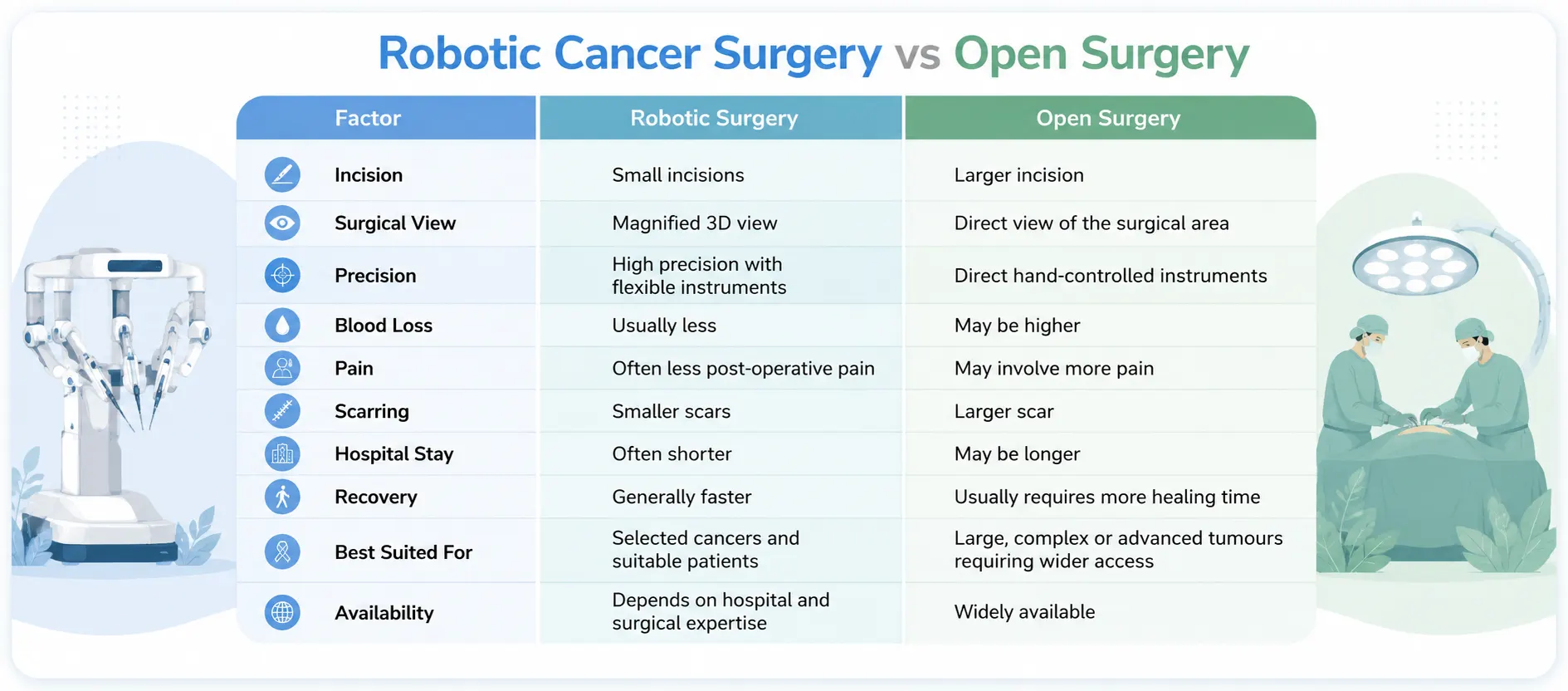
- Smaller incisions: Uses small cuts instead of a large surgical incision.
- Better visibility: Provides a magnified 3D view of the surgical area.
- Greater precision: Flexible instruments allow controlled, delicate movements.
- Less blood loss: Smaller incisions may help reduce blood loss.
- Less pain: Patients may experience less pain after surgery.
- Faster recovery: Recovery may be quicker for suitable patients.
- Suitability: Robotic surgery is not suitable for every cancer. The decision depends on the tumour and the patient’s overall condition.
Robotic Cancer Surgery vs Open Surgery: Key Differences
Which Cancer Surgery Is Right for You?
There is no single surgical approach that is best for every cancer patient.
Your surgeon will look at the type and stage of cancer, the size and location of the tumour, and your general health before recommending a surgical approach. They will also consider whether the tumour can be completely and safely removed using robotic surgery.
In some cases, robotic surgery may be a good option. In others, open surgery may provide the access and control needed to achieve the best surgical outcome.
The focus should not be on choosing the more advanced-sounding procedure. The priority is choosing the approach that allows the cancer to be removed safely and effectively while supporting your recovery and quality of life.
What Is Recovery Like After Robotic or Open Surgery?
Recovery after cancer surgery depends on the type of procedure, the cancer being treated, and your overall health. Robotic surgery may offer a quicker recovery for suitable patients, while open surgery generally requires more healing time. This is what you can expect during your recovery period in both procedures:
- Pain: Robotic surgery may cause less pain due to smaller incisions.
- Hospital Stay: Patients undergoing robotic surgery may have a shorter hospital stay.
- Scarring: Robotic surgery typically leaves smaller scars than open surgery.
- Activity: Gradual movement and return to daily activities will depend on your recovery.
- Wound Care: Keep the surgical area clean and follow your surgeon’s instructions.
- Diet: Follow any dietary recommendations provided during recovery.
- Follow-Up: Attend scheduled appointments to monitor healing and treatment progress.
Why Choose Dr. Pushpinder Gulia for Cancer Surgery in Gurgaon?
Dr. Pushpinder Gulia brings 20+ years of experience in surgical oncology, offering personalised cancer surgery, including robotic and open procedures, based on each patient’s needs. Here are the key reasons to consider his expertise:
- 20+ Years of Experience: Extensive expertise in cancer surgery.
- Robotic Surgery: Minimally invasive option for suitable patients.
- Open Surgery: Used when wider surgical access is required.
- Breast Cancer Surgery: Expertise in breast-conserving surgery and mastectomy.
- Oncoplastic Surgery: Combines cancer removal with breast reshaping.
- Personalised Care: Treatment is planned based on cancer type, stage, and individual needs.
To Summarize
Robotic and open surgery are both important approaches to cancer treatment. Robotic surgery may offer smaller incisions and a faster recovery for selected patients, while open surgery may be more appropriate when a tumour is large, complex or requires wider access.
The choice should always be based on the individual patient rather than simply choosing one technique over the other.
If you are considering cancer surgery in Gurgaon, speak with Dr. Pushpinder Gulia about your diagnosis and available surgical options. A personalised evaluation can help you understand which approach may be appropriate for your condition.

 WhatsApp