
Gastrointestinal Cancer Treatment in Gurgaon
Gastrointestinal cancer treatment in Gurgaon is tailored to the type, location, and stage of cancer. Dr. Pushpinder Gulia provides personalised treatment for GI cancers, including stomach, colorectal, pancreatic, liver, and other digestive system cancers.
Book an Appointment
Connect with our specialists for personalised guidance
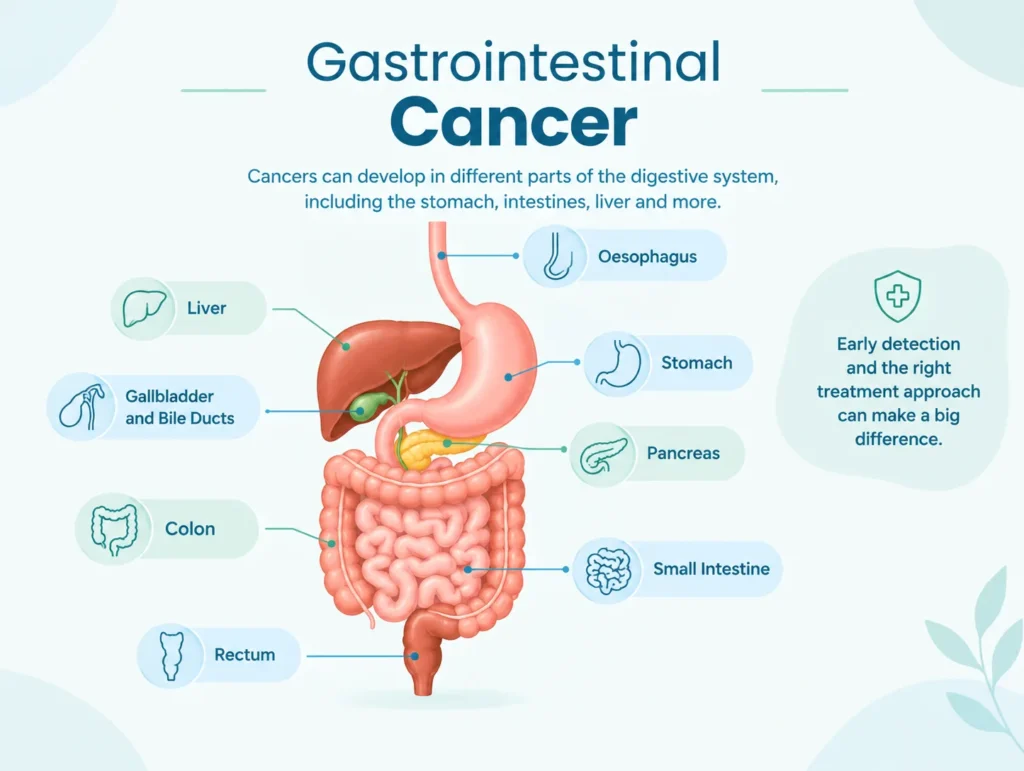
What is Gastrointestinal Cancer?
Understanding the Cancer Type
Gastrointestinal (GI) cancer refers to cancers that develop in the digestive system. Depending on where the cancer begins, it can affect the oesophagus, stomach, small intestine, colon, rectum, anus, liver, pancreas, gallbladder, and bile ducts.
The symptoms and treatment of GI cancer can vary considerably from one patient to another. Treatment depends on factors such as the type and location of the tumour, its stage, whether it has spread to nearby or distant organs, and the patient's overall health.
For some patients, surgery may be the main treatment. Others may need chemotherapy, radiation therapy, targeted therapy, immunotherapy, or a combination of treatments before or after surgery.
Types of GI Cancers
Gastrointestinal cancer is a broad term covering several cancers of the digestive system.
Oesophageal Cancer
Oesophageal cancer develops in the oesophagus, the tube that carries food from the throat to the stomach. Treatment depends on the tumour's location and stage and may involve surgery, chemotherapy, radiation therapy, or a combination of treatments.
Stomach Cancer
Stomach or gastric cancer develops in the stomach. Depending on its stage and location, treatment may include endoscopic treatment, surgery, chemotherapy, radiation therapy, targeted therapy, or immunotherapy.
Colorectal Cancer
Colorectal cancer affects the colon or rectum. Surgery may be recommended to remove the tumour and nearby lymph nodes, depending on the stage and location of the cancer. Additional treatment may be advised based on the pathology findings.
Small Intestine Cancer
Small intestine cancer develops in the small bowel and includes several tumour types. Treatment is selected according to the specific cancer type, location, stage, and extent of disease.
Liver Cancer
Liver cancer develops in the liver and may require surgery or other cancer treatments depending on the tumour, liver function, stage, and overall condition of the patient.
Pancreatic Cancer
Pancreatic cancer begins in the pancreas. Selected patients may undergo complex surgery, while others may require systemic treatment or a combination of approaches depending on the stage and whether the tumour can be surgically removed.
Gallbladder and Bile Duct Cancers
These cancers affect the organs and ducts involved in bile production and drainage. Surgery may be considered when the cancer can be safely removed. Other treatments may be required depending on the stage and spread of the disease.
Dark urine or pale stools
Changes that may occur when bile flow is affected.
How is GI Cancer Diagnosed?
Tests Used for Diagnosis
A diagnosis of gastrointestinal cancer usually involves a combination of investigations. The exact tests depend on the symptoms, suspected cancer, and part of the digestive system involved.
Common diagnostic and staging tests may include:
-
Endoscopy: A flexible camera is used to examine parts of the digestive tract and identify abnormal areas.
-
Biopsy: A sample of suspicious tissue is removed and examined under a microscope to confirm cancer and determine its type.
-
Blood tests: These may help assess overall health and organ function and may be used alongside other investigations.
-
CT scan: CT imaging can help determine the size and location of a tumour and whether cancer may have spread.
-
PET scan: In selected cases, PET imaging can help identify areas of active cancer elsewhere in the body.
-
Endoscopic ultrasound: This may help assess how deeply certain tumours have grown and whether nearby lymph nodes are involved.
-
Pathology and biomarker testing: Laboratory testing of tumour tissue can provide information that may help guide treatment decisions.
What Are the Treatment Options for GI Cancer?
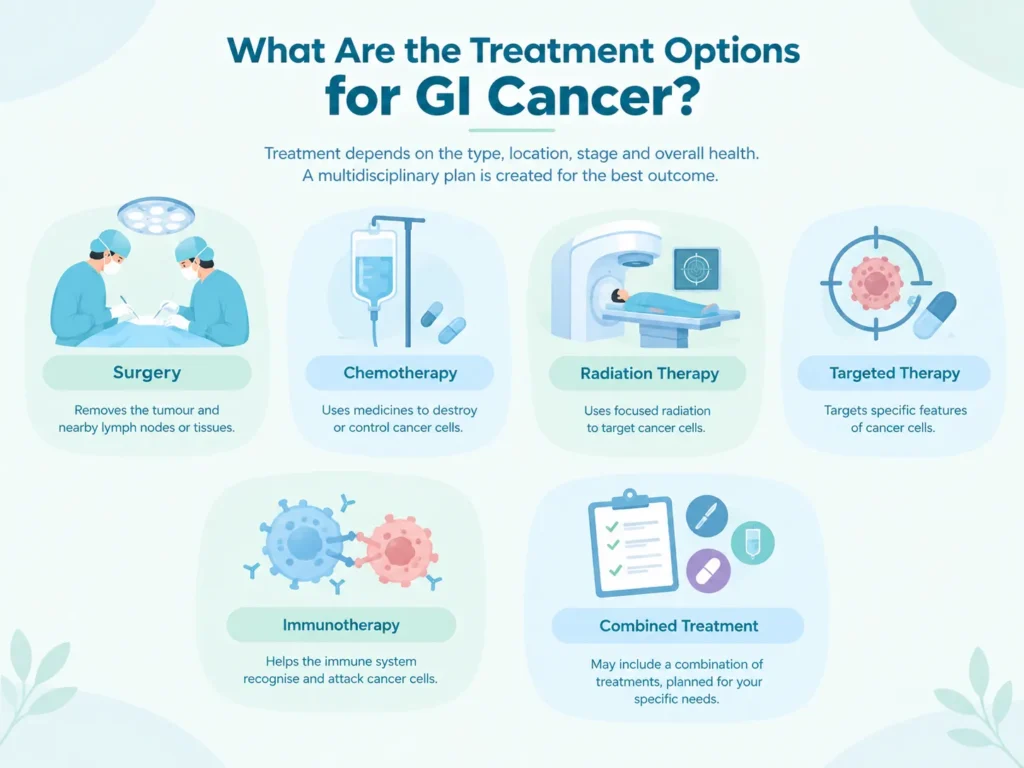
Treatment for gastrointestinal cancer depends on the type, location, stage, and overall health of the patient. A multidisciplinary treatment plan may be recommended based on the individual diagnosis.
Surgery
Surgery may be recommended to remove a localised tumour and, when required, nearby lymph nodes or affected tissues. The type of surgery depends on the organ involved and the extent of cancer.
Chemotherapy
Chemotherapy uses medicines to destroy or control cancer cells. It may be given before surgery to shrink a tumour, after surgery to reduce the risk of recurrence, or as part of treatment for advanced cancer.
Radiation Therapy
Radiation therapy uses focused radiation to target cancer cells. It may be recommended for selected gastrointestinal cancers, either before or after surgery or as part of treatment for advanced disease.
Targeted Therapy
Targeted therapy uses medicines designed to act on specific characteristics of cancer cells. It may be considered when appropriate biomarkers are identified through tumour testing.
Immunotherapy
Immunotherapy helps the body's immune system recognise and attack cancer cells. It may be recommended for selected GI cancers based on the cancer type and relevant biomarker results.
Combined Treatment
Some patients may require a combination of surgery, chemotherapy, radiation therapy, targeted therapy, or immunotherapy. The treatment sequence is planned according to the cancer type, stage, response to treatment, and overall health.
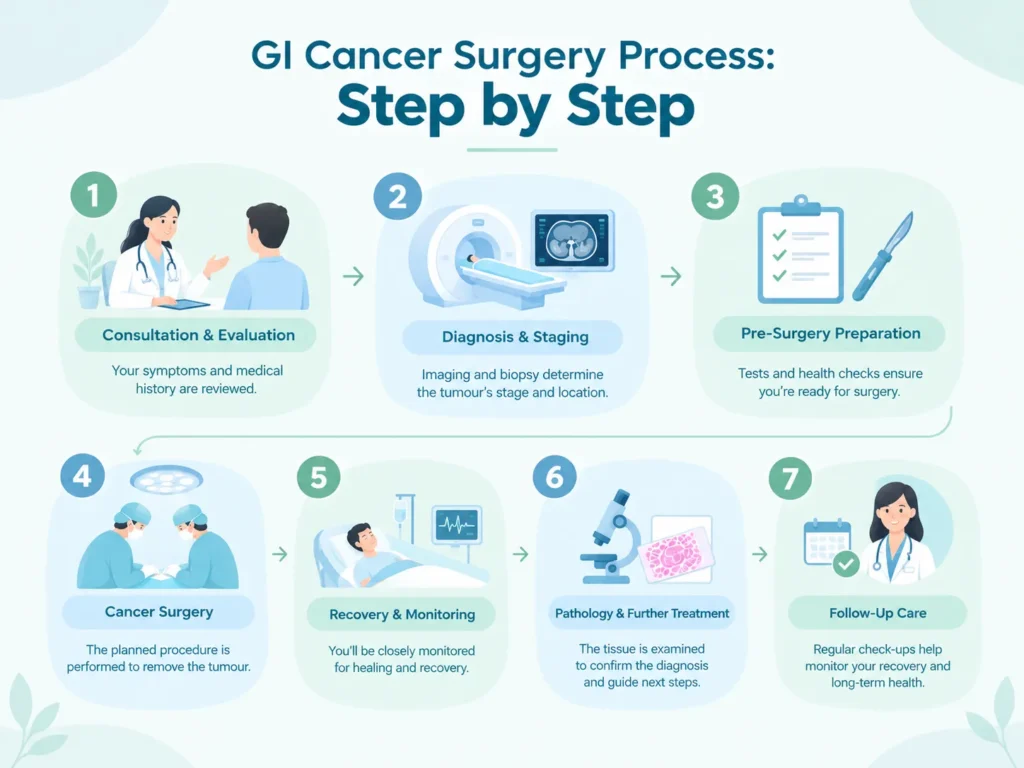
GI Cancer Surgery Process: Step by Step
From Diagnosis to Follow-up
1. Consultation and Evaluation
Your diagnosis, symptoms, medical history, existing reports, and overall health are reviewed to determine whether surgery is appropriate.
2. Diagnosis and Staging
Imaging, biopsy, pathology, and other investigations help determine the tumour's location, size, stage, and possible spread. These findings help guide treatment planning.
3. Pre-Surgery Preparation
Blood tests, anaesthesia assessment, imaging review, and other health checks may be performed to ensure you are appropriately prepared for surgery.
4. Cancer Surgery
The planned procedure is performed to remove the tumour and, when required, nearby lymph nodes or affected tissues.
5. Recovery and Monitoring
After surgery, you are monitored for healing, pain control, nutrition, bowel function, and other aspects of recovery before discharge and during follow-up.
6. Pathology and Further Treatment
The removed tissue is examined to confirm the cancer type, stage-related features, and surgical margins. Additional treatment may be recommended based on the pathology findings.
7. Follow-Up Care
Regular follow-ups help monitor recovery, manage any ongoing treatment needs, and check for signs of recurrence.
Are There Any Risks Associated?
Possible Risks to Know
Like any major surgery, GI cancer surgery can involve certain risks. These vary depending on the type of procedure, cancer stage, extent of surgery, and overall health.
-
Bleeding: Some bleeding may occur during or after surgery and may occasionally require additional treatment.
-
Infection: Infection can develop at the surgical site or internally and may require antibiotics or further care.
-
Digestive changes: Changes in bowel movements, digestion, appetite, or food tolerance may occur depending on the organ treated.
-
Leakage: In some surgeries, the area where two parts of the digestive tract are joined may develop a leak.
-
Blood clots: Surgery and reduced mobility can increase the risk of blood clots in the legs or lungs.
-
Anaesthesia-related risks: Some patients may experience reactions to anaesthesia or breathing and heart-related complications.
-
Recovery-related complications: Delayed healing or nutritional difficulties may occur, particularly after extensive GI surgery.
Your surgical team will discuss the potential risks, expected benefits, and recovery process before recommending a procedure.
Why Choose Dr. Pushpinder Gulia For GI Cancer Surgery in Gurgaon
Minimally invasive, patient-focused surgical care
Choosing the right surgical oncologist can support accurate treatment planning and personalised surgical care based on your diagnosis and overall health.
Here is why patients choose Dr. Pushpinder Gulia for their treatment:
-
23+ Years of Experience — Extensive experience in surgical oncology and complex cancer surgeries.
-
5,000+ Cancer Surgeries — Experience in performing a wide range of cancer surgeries across different types and stages.
-
Robotic and Minimally Invasive Surgery — Uses advanced surgical techniques for suitable GI cancer cases.
-
Complex GI Cancer Procedures — Experience in managing complex gastrointestinal cancers requiring detailed surgical planning.
-
Organ-Preserving Approach — Focuses on preserving healthy tissue and maintaining organ function whenever clinically appropriate.
Get Personalised GI Cancer Treatment in Gurgaon
Gastrointestinal cancer treatment depends on the type, location, and stage of cancer. Dr. Pushpinder Gulia, Surgical Oncologist in Gurgaon, provides personalised evaluation and treatment planning to help patients understand their surgical and non-surgical treatment options.
If you or a family member has been diagnosed with gastrointestinal cancer, a detailed evaluation can help determine the most appropriate treatment approach.
Book an appointment with Dr. Pushpinder Gulia to discuss your diagnosis, review your reports, and understand the available treatment options.
Frequently Asked Questions
Everything you need to know before your consultation
Is gastrointestinal cancer curable? expand_more
Yes, some gastrointestinal cancers can be cured, particularly when diagnosed at an early stage and completely removed. The chances of cure depend on the cancer type, stage, spread, overall health, and response to treatment.
What are the early signs of GI cancer? expand_more
Early GI cancer may cause subtle or non-specific symptoms such as persistent indigestion, abdominal discomfort, changes in bowel habits, reduced appetite, unexplained weight loss, difficulty swallowing, or blood in the stool.
How do I choose a GI cancer surgeon in Gurgaon? expand_more
Look for a surgical oncologist with experience in gastrointestinal and gastric cancers, complex cancer surgery, and multidisciplinary treatment planning. Consider their experience, surgical expertise, treatment approach, and access to appropriate diagnostic and surgical facilities.
Is GI cancer surgery safe? expand_more
GI cancer surgery is generally considered safe when performed by an experienced surgical team, but like any major surgery, it carries risks such as bleeding, infection, blood clots, leakage, and digestive complications.
Can GI cancer be treated without surgery? expand_more
Some GI cancers can be treated without surgery, depending on their type, stage, location, and response to other treatments. Options may include chemotherapy, radiation therapy, targeted therapy, immunotherapy, or a combination of treatments.
How can I book a consultation with Dr. Pushpinder Gulia? expand_more
You can book a consultation by filling in the form on this page, calling our helpline, or messaging us on WhatsApp. For urgent cases, same-day telephonic consultations are available. Our team will respond within a few hours.
 WhatsApp