
Liver Cancer Treatment in Gurgaon
Dr. Pushpinder Gulia provides surgical oncology consultation for patients seeking liver cancer treatment in Gurgaon. Treatment planning depends on the type and stage of cancer, tumour location, liver function, and overall health.
Book an Appointment
Connect with our specialists for personalised guidance
What Is Liver Cancer?
Understanding the Disease Before Choosing Treatment
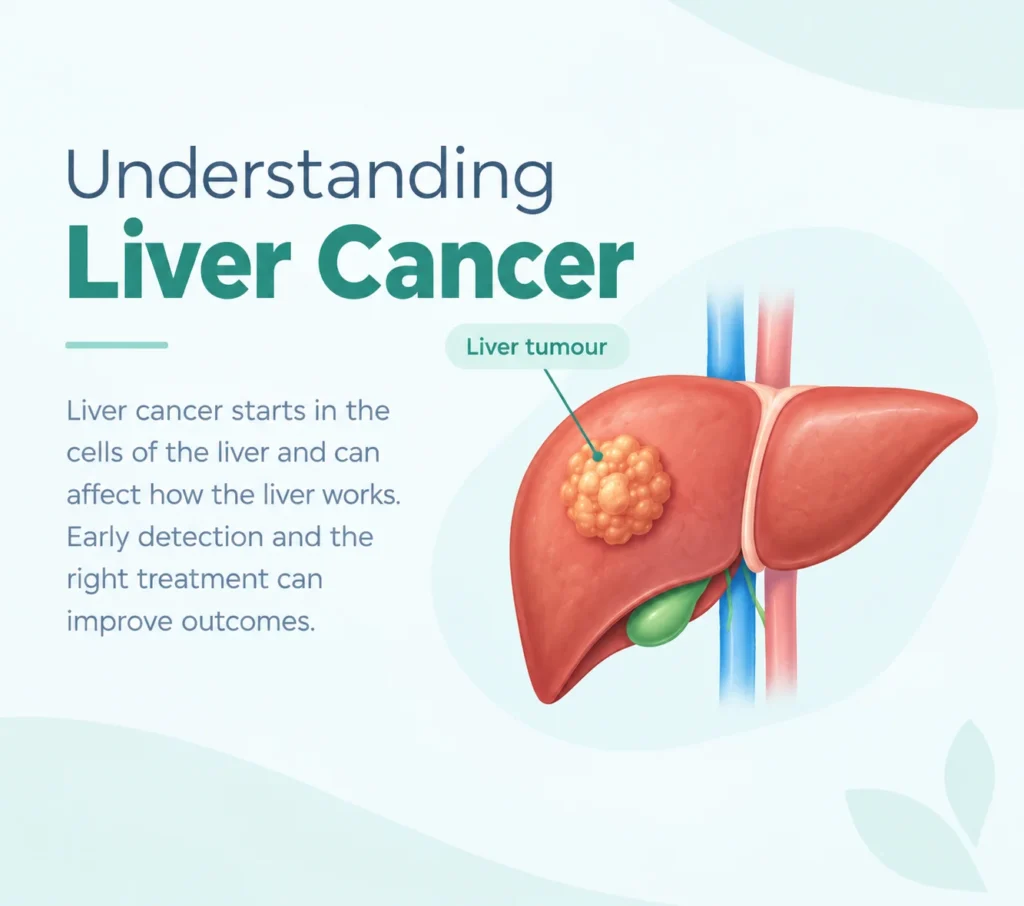
Liver cancer develops when abnormal liver cells grow uncontrollably and form a tumour. It may begin in the liver itself or spread there from another organ. Treatment depends on the cancer type, stage, liver function, and overall health.
The liver is located in the upper right part of the abdomen. It performs several essential functions, including processing nutrients, producing bile, and filtering substances from the blood.
Liver cancer occurs when changes in liver cells cause them to grow abnormally. It is broadly classified into:
-
Primary liver cancer: Cancer that begins in the liver.
-
Secondary liver cancer: Cancer that spreads to the liver from another part of the body, also known as liver metastasis.
Distinguishing between primary and secondary liver cancer is important because treatment depends on where the cancer originated and how far it has spread.
What Are the Early Symptoms of Liver Cancer?
Signs That Should Not Be Ignored
Unexplained weight loss
Losing weight without changes to diet or physical activity.
Loss of appetite
Feeling less hungry or becoming full quickly.
Upper abdominal pain
Discomfort or pain, particularly on the right side of the abdomen.
Abdominal swelling
A swollen abdomen, sometimes caused by fluid accumulation.
Jaundice
Yellowing of the skin and whites of the eyes.
Nausea and vomiting
Persistent nausea or digestive discomfort.
Fatigue and weakness
Feeling unusually tired or lacking energy.
Dark urine or pale stools
Changes that may occur when bile flow is affected.
What Causes Liver Cancer?
Understanding the Risk Factors
Liver cancer develops when changes in liver cells cause abnormal growth. Important risk factors include chronic hepatitis B or C infection, cirrhosis, certain forms of fatty liver disease, heavy alcohol consumption, diabetes and some inherited liver conditions. Having a risk factor does not mean cancer will inevitably develop.
Several conditions can increase the risk of liver cancer by causing long-term inflammation or damage to liver cells.
Common risk factors include:
-
Chronic hepatitis B: Long-term infection can increase the risk of liver cancer, even in some people without cirrhosis.
-
Chronic hepatitis C: Persistent infection can cause liver damage, scarring and cirrhosis.
-
Liver cirrhosis: Severe scarring of the liver increases the risk of developing cancer.
-
Fatty liver disease: Some forms of fatty liver disease can progress to inflammation and advanced liver damage, increasing cancer risk.
-
Excessive alcohol consumption: Long-term heavy drinking can damage the liver and contribute to cirrhosis.
-
Diabetes and metabolic conditions: These are associated with an increased risk of liver cancer.
-
Inherited liver conditions: Conditions such as hereditary haemochromatosis and Wilson's disease can contribute to liver damage.
-
Aflatoxin exposure: Toxins produced by certain moulds in contaminated food crops are associated with liver cancer.
Risk reduction may include hepatitis B vaccination, appropriate treatment for hepatitis infections, limiting alcohol consumption, maintaining a healthy weight and managing existing liver conditions. People at increased risk should discuss suitable surveillance with their doctor.
Liver Cancer Treatment Options in Gurgaon
Treatment May Include Surgery and Other Cancer Therapies
Liver cancer treatment may include liver resection surgery, liver transplantation, tumour ablation, targeted therapy, immunotherapy or radiation therapy. The choice depends on the cancer type, stage, tumour location, liver function and the patient's overall health.
Liver cancer treatment is planned according to the individual diagnosis. Before recommending a treatment, the medical team considers whether the tumour can be removed, whether the cancer has spread and how much healthy liver function can be preserved.
The main treatment options include:
Liver Cancer Surgery: Surgery may be considered when the tumour can be removed safely and sufficient healthy liver tissue will remain.
-
Liver resection: Removes the part of the liver containing the tumour.
-
Liver transplantation: Replaces the diseased liver and may be an option for selected patients who meet eligibility criteria.
Tumour Ablation: Techniques such as radiofrequency ablation or microwave ablation use heat to destroy cancer cells. These may be suitable for certain tumours based on their size, number and location.
Targeted Therapy: Medicines act on specific pathways involved in cancer growth and may be recommended for certain patients, particularly when local treatment is not suitable.
Immunotherapy: These medicines help the immune system recognise and attack cancer cells. They may be considered for eligible patients depending on the cancer type and stage.
Radiation Therapy: Carefully directed radiation may help control a tumour in selected cases.
Other Liver-Directed Treatments: Procedures such as transarterial chemoembolisation (TACE) may be considered for selected patients to deliver treatment through the blood vessels supplying the tumour.
Not every patient needs the same treatment. A specialist assessment helps determine which approaches are appropriate and whether surgery should be considered alone or alongside other therapies.
When Is Liver Cancer Surgery Recommended?
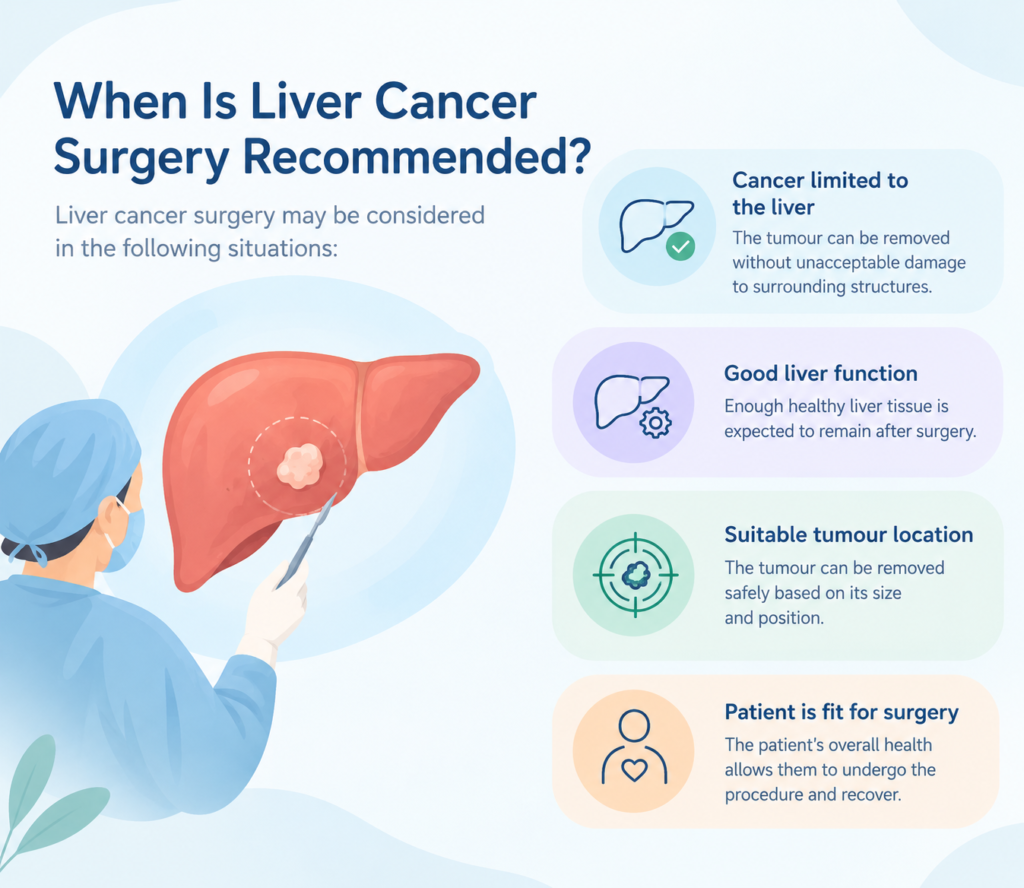
Surgery may be recommended for liver cancer when the tumour can be removed safely, and enough healthy liver tissue will remain to function properly. The decision depends on the cancer's stage, tumour location, liver function, and the patient's overall health.
Surgery can be an effective treatment option for selected patients with liver cancer. Before recommending an operation, the doctor evaluates the tumour, checks whether the cancer has spread, and assesses how well the liver is functioning.
Liver cancer surgery may be considered in the following situations:
-
Cancer limited to the liver: The tumour can be removed without unacceptable damage to surrounding structures.
-
Good liver function: Enough healthy liver tissue is expected to remain after surgery.
-
Suitable tumour location: The tumour can be removed safely based on its size and position.
-
Patient is fit for surgery: The patient's overall health allows them to undergo the procedure and recover.
Why Consult Dr. Pushpinder Gulia for Liver Cancer Treatment in Gurgaon?
Dr. Pushpinder Gulia provides specialised surgical oncology care for liver cancer, focusing on personalised treatment planning and appropriate surgical approaches based on the cancer’s stage, location and spread.
-
23+ years of surgical oncology experience
-
5,000+ cancer surgeries
-
Expertise in liver and complex cancer surgery
-
Personalised surgical planning based on the extent of cancer
-
Focus on complete tumour removal and appropriate surgical margins, where feasible
-
Advanced robotic and minimally invasive surgery for suitable cases
-
Individualised care focused on cancer control, recovery and overall wellbeing
Take the Next Step After a Liver Cancer Diagnosis
Understand Your Diagnosis and Treatment Options
A liver cancer diagnosis can bring uncertainty about surgery, recovery, and the next steps in care. Understanding the type and stage of cancer is essential to choosing the most suitable treatment approach.
If you or a family member has been diagnosed with liver cancer or advised to consider surgery, a consultation with Dr. Pushpinder Gulia can help you discuss the diagnosis and potential surgical options in Gurgaon.
Bring your available imaging reports, biopsy results, and previous treatment records to the consultation to support the assessment.
Frequently Asked Questions
Answers to Common Questions About Liver Cancer
What are the early warning signs of liver cancer? expand_more
Early liver cancer may not cause noticeable symptoms. Warning signs can include unexplained weight loss, loss of appetite, upper abdominal pain, abdominal swelling, fatigue, and jaundice. A doctor should evaluate persistent or unexplained symptoms.
Can liver cancer be treated successfully if detected early? expand_more
Early detection may make more treatment options available, including surgery for suitable patients. Outcomes depend on the cancer type, stage, liver function, overall health and response to treatment. Early diagnosis does not guarantee a particular outcome.
Is surgery always necessary for liver cancer? expand_more
No. Surgery is only one treatment option. Depending on the cancer type, stage and liver function, treatment may involve ablation, targeted therapy, immunotherapy, radiation therapy or other approaches.
What is the cost of liver cancer treatment in Gurgaon? expand_more
The cost of liver cancer treatment in Gurgaon depends on the type and stage of cancer, investigations, treatment approach, hospital stay, medicines and follow-up care. Surgical procedures and non-surgical therapies have different costs. An individual estimate can be discussed after the diagnosis and treatment plan have been reviewed.
Which doctor should I consult for liver cancer treatment in Gurgaon? expand_more
A surgical oncologist can assess whether surgery is appropriate. Depending on the diagnosis, care may also involve a hepatologist, medical oncologist and other specialists. Dr. Pushpinder Gulia provides surgical oncology consultation in Gurgaon.
How can I book an appointment with Dr. Pushpinder Gulia? expand_more
You can book an appointment with Dr. Pushpinder Gulia by visiting his website or contacting his clinic directly to confirm availability and consultation timings.
 WhatsApp